For the ancestors of the Haliwa-Saponi and neighboring Piedmont Siouan nations, clothing was never just a means of physical protection. It was a canvas of identity, a declaration of clan lineage, and a profound reflection of their relationship with the natural world.
When colonial forces and the strict racial laws of the Jim Crow era attempted to erase their indigenous heritage, the traditional arts of leatherworking, smoking, and botanical dyeing served as a silent, unbroken language of cultural survival.
1. The Raw Material: Crafting the Perfect Canvas
Before a garment could be dyed, it had to be harvested and prepared. The Saponi were master textile artists who utilized the rich animal and plant life of the North Carolina and Virginia Piedmont.
Soft-Soled Moccasins and Leggings
Unlike the hard-soled rawhide footwear of the Western Plains, the Saponi wore soft-soled moccasins, constructed primarily in the traditional center-seam or pucker-toe style. A single piece of brain-tanned deer or elk hide was wrapped upward and gathered tightly over the toes with a central stitched seam. Wide leather flaps wrapped around the ankles—left down during warm weather and tied high over leggings when navigating thick briars or deep winter snow.
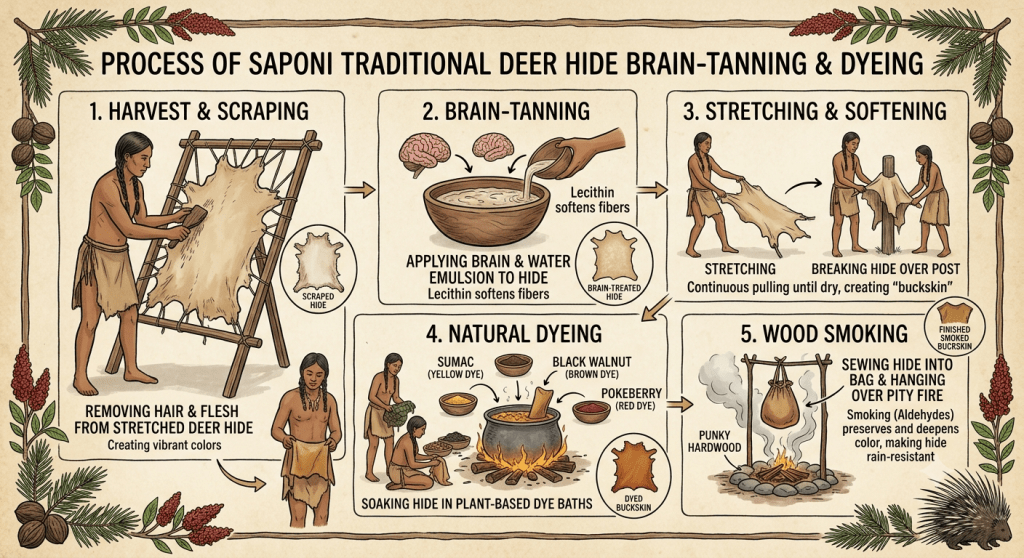
Brain-Tanning: The Art of Softness
Raw hides dry stiff and unwearable. To transform them into a velvet-soft, breathable material, Saponi women used a sophisticated chemical process called brain-tanning. The natural oils and emulsified fatty acids of the animal’s own brains were worked deeply into the scraped skin. This permanently broke down the stiff protein fibers, resulting in a pristine, cream-white leather that was comfortable to wear directly against the skin.
2. The Alchemy of the Piedmont Plant Palette
A stark white deer hide was a blank slate. To display clan affiliations and status, the Saponi harvested roots, barks, and berries from local river valleys to create permanent, striking dyes.
- Deep Blacks & Chocolate Browns (Black Walnut): The hulls of the native Black Walnut (Juglans nigra) were boiled into a dense, tannic acid-rich broth. Soaking leather or river cane in this mixture produced a dark, highly prized black or deep brown used for ceremonial moccasins and winter cloaks.
- Fiery Crimsons (Bloodroot and Bedstraw): Red symbolized vitality, war, and spiritual protection. The roots of the Bloodroot (Sanguinaria canadensis) plant were dug in early spring, dried, and pounded into a powder. When mixed with animal fats, it formed a vibrant, long-lasting red pigment.
- Golden Ochres (Sassafras and Hickory): The roots of Sassafras and the inner bark of Shagbark Hickory trees were boiled to release warm, sunny yellows and deep golds.
- Soft Sky Blues (Wild Indigo): Long before the introduction of commercial plantation indigo, the Saponi gathered Wild Indigo (Baptisia tinctoria) from sandy Piedmont soils. Fermenting these yellow-flowering leaves released indigotin, which rubbed a soft, meditative sky-blue tint into white leather.

3. The Smoke-Dye Method: Engineering for Survival
While plant juices provided beautiful colors, everyday survival gear required a specialized technique called smoke-dyeing. This process was an essential piece of indigenous engineering:
- The tailored hide was stitched into a hollow, enclosed cylinder or bag.
- This bag was suspended upside down over a small, smoldering ground pit fire.
- The fire was fed exclusively with punk-wood (rotted oak or hickory) and dried pine cones to create dense, heavy smoke with absolutely no open flame.
- As the smoke rose, the natural tars, resins, and creosote from the wood chemically fused with the pores of the leather.
The Result: The smoke turned the white hide a beautiful, honey-gold or rich tan color. Most importantly, it rendered the moccasins and leggings waterproof. If a hunter waded through a Piedmont stream, smoke-dyed leather would dry out completely soft and pliable, whereas un-smoked leather would dry out stiff and unwearable.
4. The Colonial Fur Trade and “Stroudwater Blue”
By the late 1700s, the colonial fur trade radically altered traditional dress. European merchants flooded trade routes with a heavy English wool fabric known as Stroudwater cloth, which was mass-dyed using imported, tropical true indigo (Indigofera tinctoria).
The Saponi adopted this deep navy blue fabric eagerly. It was lighter than heavy hides, dried rapidly in the humid Southern weather, and the rich blue color did not fade under the harsh sun. Traditional dress rapidly evolved into a beautiful hybrid style: hunters and clan mothers paired their hand-crafted, smoke-dyed deerskin moccasins with wrapped skirts and shirts made of vibrant blue trade cloth, accented by intricate glass seed beads.
5. Hiding in the Shocco Woods: A Legacy Shared
The final chapter of this textile history took place when Saponi ancestors retreated to the isolated safe haven of The Meadows and Shocco in Warren County. In the late 1700s and early 1800s, this close-knit indigenous enclave actively sheltered and integrated escaped African slaves and free people of color.
Deep in the swampy lowlands, a powerful exchange of survival knowledge occurred. West African ancestors brought their generationally mastered, elite understanding of fermenting commercial indigo vats, while the Saponi provided their deep, localized knowledge of where to find wild mordants (natural fixatives like alum and oak bark) to lock the dye into fabric permanently.
Together, they stripped the crop of its plantation profits and used it as a shared craft of resistance, weaving their families and cultures together. When grandmothers in the Hedgepeth, Richardson, and Lynch lines continued to showcase an elite eye for color coordination, intricate quilting patterns, and herbal remedies, they were carrying the literal cellular memory of these ancient Piedmont dye-masters.
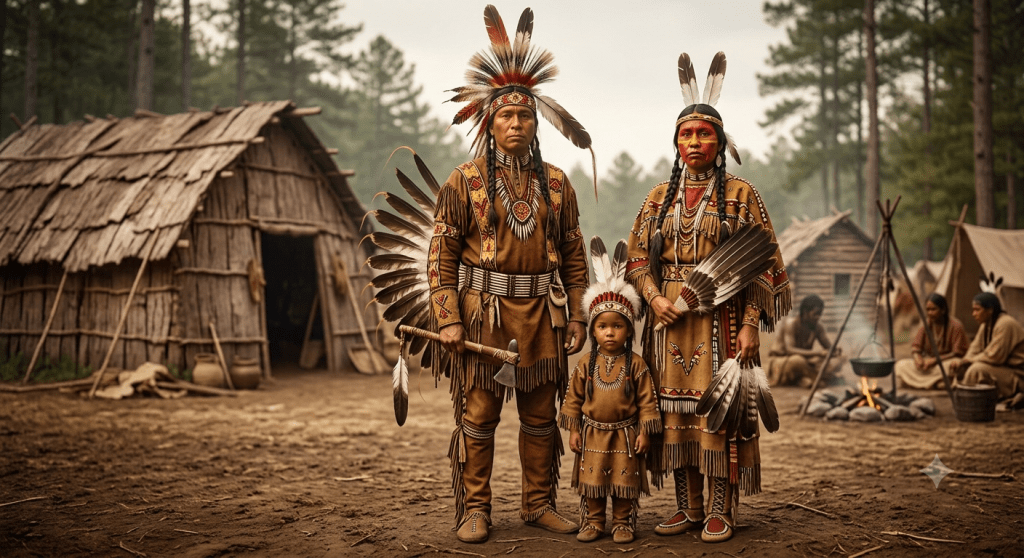
The feathers worn in traditional regalia—particularly among Southeastern Siouan nations like the Saponi—hold deep spiritual, social, and ceremonial significance. They are never merely decorative; instead, they serve as a visual language and a sacred connection to the upper world.
Here is the significance of the feathers shown in the regalia:
1. The Headpieces (Sacred Connection)
- The Eagle and Hawk Feathers: The upright feathers in the headpieces typically come from birds of prey like eagles or hawks. Because these birds fly highest in the sky, they are considered messengers to the Creator. Wearing their feathers is a way to honor that sacred connection and bring strength and wisdom to the wearer.
- Status and Leadership: The structure and number of feathers in a headpiece often signify a person’s standing, achievements, or role within the community. Leaders, elders, or respected warriors wear specific feather arrangements to denote their responsibility to protect and guide the people.
2. The Bustle and Back Feathers
- The Fan-Like Bustle: The large arrangement of feathers radiating behind the man’s waist mimics the wings or tail of a bird. Traditionally, this type of regalia is deeply tied to ceremonial dances. As the dancer moves, the feathers catch the air, symbolizing the movement of sacred animals and bringing the prayers of the dance to life.
3. The Handheld Feather Fans
- Ceremonial Tools: The women and men holding feather fans are carrying important cultural tools. Feather fans are used in ceremonies to disperse smoke (such as sage, tobacco, or cedar) during cleansing rituals, to cool individuals, or to signal specific gestures during traditional songs and dances.
4. Natural Storytelling
- Ecological Identity: The feathers used reflect the native wildlife of the Virginia and North Carolina Piedmont forests. By integrating turkey, hawk, and eagle feathers into their clothing, the Saponi visually reinforce their kinship with the natural world and the specific animals that share their ecosystem.


