Dear Family,
For years, many of us researching our family tree have wondered about the exact origins of our unique family names, our connection to the Shocco Creek community, and how our ancestors fit into the history of the Piedmont Siouan tribes. Today, we are breaking down the incredible, documented history of our lineage—tracing a path through survival, love, legal battles, and the calculated ways our ancestors altered their names to protect their freedom for generations.
1. The Matriarch: Joane Scott (The 1690s)
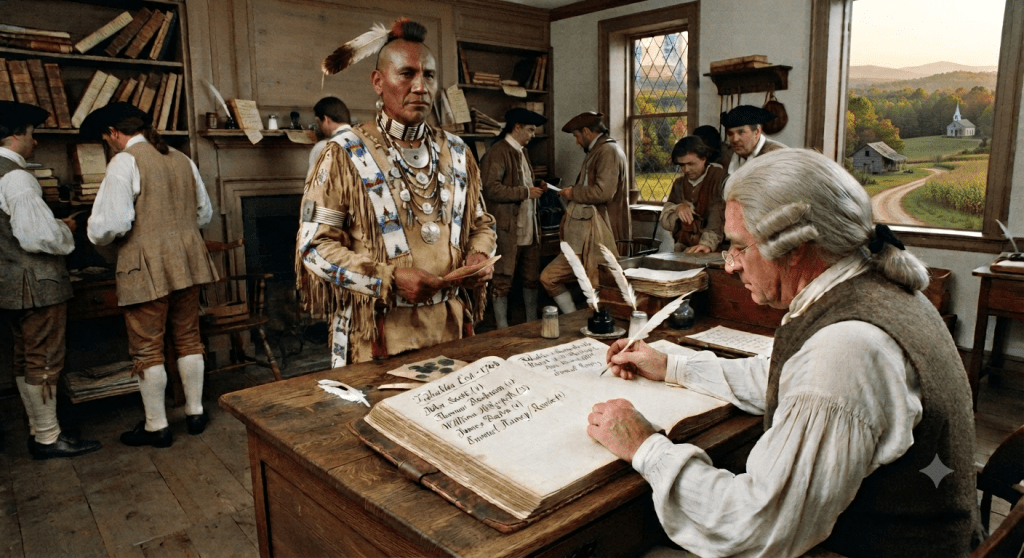
Our story on paper begins in late-17th-century colonial Virginia with a woman named Joane Scott. In 1695 court records, Joane was legally documented by colonial authorities as an “Egiptian” (the historical term for a European Romani immigrant). Facing the strict and hostile environment of early colonial Virginia, Joane established a common-law partnership that would forever change our family’s genetic and cultural trajectory.
2. The Biological Root: Thomas Busby, “An Indyan Boy”
Joane Scott’s children were fathered by a Native American youth named Thomas Busby.
- The Record: On July 1, 1684, the Surry County, Virginia court officially “adjudged” Thomas’s age to be just 10 years old.
- The Servitude: He was held as an indentured servant in the household of a planter named Robert Caufield.
- The Name: He was assigned the English name “Thomas Busby” after Captain Thomas Busby, a prominent Virginia frontier militia officer who served as the official Crown Interpreter to the local Meherrin, Nottoway, and Saponi tribes.
Because Thomas Busby was an Indigenous man, the children he bore with Joane Scott carried a distinct mixed-heritage identity. In colonial deeds, their children and grandchildren were frequently tracked under the double surname: “Busby alias Scott.”
3. The 1747 Crisis: Why We Changed Our Name to Scott
As Thomas Busby and Joane Scott’s grandsons grew up, they migrated south into North Carolina to find land and freedom. Among them was Francis Busby(who lived under the assumed name Francis Scott).
Francis settled along Burnt Coat Swamp in Halifax County, North Carolina, and married a woman named Margaret.
- The Court Summons: In 1747, Francis was hauled into the Halifax Court and officially charged with “concealing tithables” for failing to report and pay taxes on his wife, Margaret.
- The Discriminatory Tax: Under colonial law, white women were never taxed. However, all free non-white women (Native American, mixed-race, and Black) over the age of 16 were legally classified as “tithables.” If a man married an Indigenous woman, the government forced him to pay a heavy, double tax every single year just for his wife being alive.
- Margaret’s Identity: This court case serves as legal proof of Margaret’s heritage. She was an integrated woman of Indigenous descent living within the Piedmont frontier network. By “concealing” her identity from tax collectors, Francis was trying to shield his family from discriminatory fees.
To escape this relentless financial harassment and break the paper trail linking them back to indentured Indian servants in Virginia, Francis and his brothers made a strategic choice. They permanently dropped the surname Busby. An official colonial court affidavit later filed in Orange County, North Carolina explicitly confirms that the family permanently adopted the “assumed name of Scott” to evade the punitive tithable laws.
4. The Shocco Creek Sanctuary & Cashe Scott’s Legacy
From Halifax County, the family migrated slightly further inland into the Shocco Creek borderlands of Granville, Warren, and Franklin counties. This region was the primary geographic refuge for the remnants of the Saponi, Tutelo, and Cheraw nations who chose to stay together rather than assimilate into white colonial society.
In this tight-knit community, Francis and Margaret’s son, John Scott, raised his family. Because the Piedmont Siouan tribes practiced strict endogamy (marrying within the tribal community for survival) and operated under a traditional matrilineal clan system, John’s unnamed partner—Cashe’s mother—was also a woman of Saponi descent.
Their daughter was Cashe (Keziah) Scott. Through her grandfather (John), her great-grandfather (Francis), and her great-great-grandfather (Thomas Busby), Cashe carried a deeply consolidated Native American ancestry.
5. The Puckram Connection: Joining Two Stronghold Lines
When Cashe Scott married Elisha Puckram, she bound two of the most prominent ancestral lineages of the region together. The Puckrams, like the Scotts, were heavily documented across the Virginia and North Carolina borders as a free, localized, non-white population intricately tied to the Haliwa-Saponi and Occaneechi-Saponi ancestral pools.
The Puckram family name carries its own unique history of transformation. Originally recorded as Puckram or Pegram in early colonial tax rolls, census records, and marriage bonds, the name underwent a distinct shift as the family transitioned out of the 19th century.
6. The Linguistic Shift: How Puckram Became Bookram
For family members researching records from the mid-to-late 1800s, you will notice a transition where Puckram morphs into Bookram. This happened due to a combination of historical factors:
- Phonetic Spelling by Clerks: In the 18th and 19th centuries, census takers, court clerks, and tax assessors wrote names down phonetically based on how they sounded. The hard “P” sound in Puckram easily softened into a “B” sound (Buckram or Bookram) in local Southern dialects.
- Illiteracy and Record Keeping: Because colonial laws intentionally restricted formal education for free people of color and Native Americans, many ancestors could not read or write to correct the spelling on official documents. Over decades, the phonetic spelling written down by white clerks became the permanent, legal name of the household.
- The “Buckram” Step: In census records spanning from the 1830s through the Reconstruction era, you can visually trace the name shifting from Puckram to Buckram, and finally stabilizing into the modern spelling of Bookram used by our branches today.
Conclusion: Our Tribal Endorsement
Because Cashe Scott Puckram’s children and grandchildren remained in these Piedmont strongholds, she stands today as a foundational matriarch of the Haliwa-Saponi Indian Tribe and related Piedmont Siouan descendants. Our surnames—whether they evolved from Busby to Scott, or Puckram to Bookram—aren’t just random labels. They were shields used by our ancestors to navigate colonial oppression, preserve their freedom, and protect the Indigenous bloodline that we still carry proudly today.
The Masonic Shield: Protecting Our Lineage on the Frontier
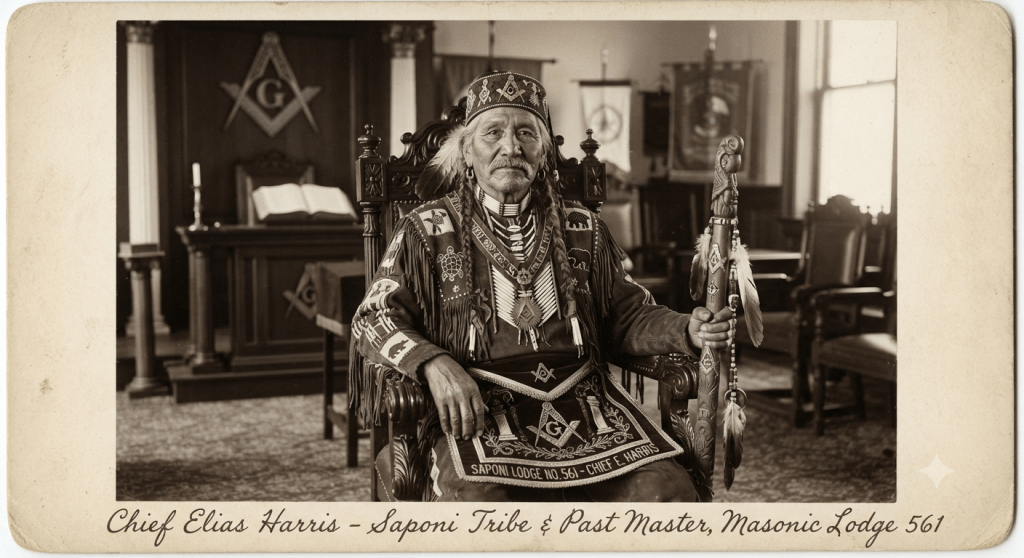
As our ancestors navigated the hostile colonial legal system, they didn’t just rely on changing their names—they also leveraged powerful fraternal networks for safety. This is where Freemasonry played a quiet but vital role in the survival of the Scott and Bookram families.
During the mid-to-late 1700s, our family lived in the exact cradle of early North Carolina Freemasonry. When Francis Busby/Scott was managing his land along Burnt Coat Swamp, he was living just a short distance from the historic Royal White Hart Lodge No. 2 in the town of Halifax. Shortly after, Dornoch Lodge No. 5 was chartered right in Bute County (the parent county of Warren and Franklin), sitting squarely in the heart of our Shocco Creek community.
For free families of Native American descent, the local Masonic lodge served three crucial purposes:
- Silent Legal Protection: Many of the prominent local landowners, court clerks, and neighbors who signed as witnesses on the Scott family’s land deeds, marriage bonds, and estate settlements were high-ranking Masons. Under the Masonic oaths of mutual aid and discretion, these influential neighbors often chose to look the other way regarding our family’s “tithable” status, shielding them from predatory tax collectors.
- Securing Land Deeds: In an era when the land of non-white families was constantly at risk of being seized by unscrupulous colonists, having alliances with local lodge brothers ensured that our property boundaries and legal deeds remained securely recorded and protected in county courthouses.
- Becoming the Civic Core: As the family transitioned into the 1800s and post-Civil War eras, our ancestors shifted from relying on sympathetic neighbors to taking direct leadership within the fraternity. Generations of Scott and Bookram men heavily embraced Prince Hall Freemasonry. In our tight-knit tribal communities, the local Masonic lodge became the civic and spiritual backbone—the men running the lodges were the exact same elders, educators, and leaders fighting to keep our families unified, self-governing, and free.


