In the early 1800s, Free People of Color—particularly those of Saponi and Nanticoke descent in Granville County, North Carolina—navigated a unique and complex “yeoman-class” lifestyle. They occupied a distinct legal and social space, positioning them between the white planter elite and enslaved populations. [1, 2, 3]
Because North Carolina law officially classified non-reservation Indigenous people as “Free Persons of Color,” their lifestyle was defined by a fierce commitment to community survival, land ownership, and the preservation of their tribal heritage. [1, 2]
1. Land Ownership and Agriculture
The foundation of their independence was real estate. Unlike enslaved populations, Free People of Color had full legal personhood to own, buy, and pass down property through generations. [1]
- Yeoman Farming: Families like the Scotts, Puckrams, Chavises, and Basses owned independent homesteads ranging from small plots to sprawling multi-acre plantations. []
- Cash Crops: They operated as self-sufficient agriculturalists, primarily cultivating tobacco, corn, and raising livestock like cattle and horses. [1, 2]
- Material Wealth: Estate inventories from Granville County court files reveal that these households owned fine consumer goods, such as pewter plates, feather beds, and advanced agricultural equipment, reflecting a stable, working-to-middle-class lifestyle. [1]
2. Skilled Labor and Trades
While agriculture was the primary economic engine, many families specialized in highly skilled manual labor and artisan crafts, which made them economically indispensable to the regional economy. [1]
- Artisans: Men worked as master blacksmiths, coopers (barrel makers), carpenters, stone masons, shoe makers, and saddle makers. [, 2]
- Domestic Economies: Women managed complex home textile industries, generating income as highly sought-after spinners, weavers, and seamstresses. []
- Inter-Class Commerce: They held a legal right to keep their own wages, enter into formal business contracts, and sue both white citizens and other free non-whites in court to collect unpaid debts. [1]
3. Tight-Knit Intermarriage (Endogamy)
To protect their autonomy, property, and tribal identities, families practiced a strict system of endogamy (marrying almost exclusively within their own community).
- Kinship Hubs: Isolated settlements formed along county lines and waterways. Families deliberately intermarried across a small pool of allied surnames (e.g., Puckram, Scott, Hedgepeth, Chavis, Bass, Jeffries, and Pettiford). [1]
- Preserving Identity: While outsiders viewed these settlements through a broad racial lens, local historians and community members recorded that they maintained a strong internal awareness of their Indigenous identity. Intermarriage ensured that family lands stayed within trusted tribal networks.[1, 2]
4. Nuanced Legal Rights and Civil Participation
In the early 1800s, Free People of Color possessed significant civil rights that would later be stripped away as the Civil War approached. [, 2]
- Voting Rights: Until a restrictive state constitutional amendment revoked the right in 1835, free men of color who met property requirements legally voted in North Carolina elections.
- Militia Service: Men were required to serve in local militias, standing side-by-side with white neighbors to defend the county.
- Education and Religion: Some families could afford to send their children to local schools or hire private tutors. They built their own independent churches or worshipped in shared local congregations, often serving as ministers and spiritual leaders. [1, 2, 3, 4]
5. Growing Legal Restrictions and Hardships
Despite their economic successes, the lifestyle of Free People of Color was constantly threatened by systemic racism and changing state laws. [1, 2]
- The Shadow of Slavery: They faced constant pressure to prove their free status. Traveling without official “free papers” carried the severe risk of being kidnapped or illegally sold into slavery.
- The 1830s Shift: Following regional slave rebellions (such as Nat Turner’s rebellion in Virginia), North Carolina passed increasingly aggressive laws. Free People of Color were stripped of their right to vote, banned from carrying firearms without a court license, and barred from teaching literacy. [, 2, 3]
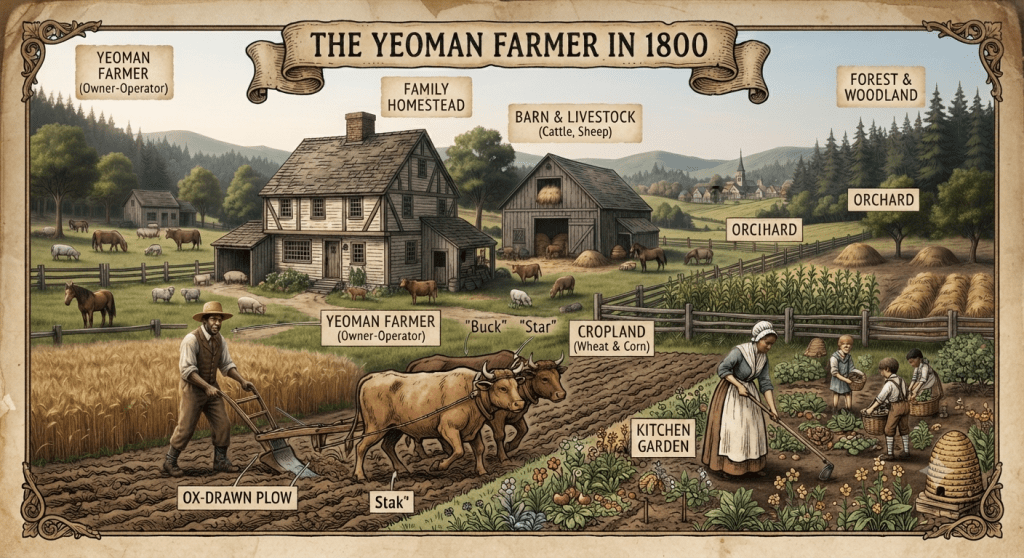
The Hidden History of the Yeoman Farmer
When we look back at the history of the pre-Civil War South, popular culture often shows us only two groups: wealthy plantation owners and enslaved laborers. But there was a massive, independent middle class that stood between them: the Yeoman Farmers.
For Free People of Color and families of Indigenous descent—such as the Saponi and Nanticoke lines in Granville County, North Carolina—yeoman farming wasn’t just a job. It was a vital shield for survival, autonomy, and independence.
What is a Yeoman Farmer?
A yeoman farmer was a self-sufficient, small-scale landowner. Unlike the elite planters who controlled thousands of acres, yeomen operated modest family farms.
They lived by a simple rule: work your own land, feed your own family, and protect your independence.
The Core Pillars of the Yeoman Lifestyle
- True Land Ownership: Yeomen legally owned their deeds. Farms typically ranged from small homesteads to a few hundred acres.
- Family-Powered Labor: The farm relied on the daily labor of the family. Spouses, children, and occasionally neighbors worked the fields together.
- Diversified Crops: Instead of relying entirely on a single cash crop, they grew food for survival (corn, wheat, and vegetables) alongside small patches of market crops (tobacco or cotton) to pay taxes.
- Total Self-Reliance: The primary goal was to secure food and shelter for the household. Anything left over was bartered locally for manufactured goods like iron tools or fine cloth.
Yeoman vs. Planter: What Was the Difference?
To understand how unique this lifestyle was, look at how it compared to the wealthy plantation class:
- The Planters: Relied on mass enslaved labor, focused entirely on commercial profit, and formed a wealthy political aristocracy.
- The Yeomen: Relied on immediate family labor, focused on household self-sufficiency, and formed a respected rural working class.
Why Yeoman Farming Mattered to Free People of Color
For our ancestors navigating a highly restrictive and changing legal landscape in the early 1800s, owning a yeoman farm changed everything:
- A Buffer from Outside Interference: Owning land created a private sanctuary. It allowed families to live, worship, and gather away from the strict surveillance of the planter elite.
- Economic Protection: Because they were self-employed, these families could not be financially manipulated, starved out, or controlled by hostile landlords or employers.
- Preserving Tribal Networks: Land ownership allowed families to practice endogamy (marrying within their own community). By passing land down strictly to other trusted, local ancestral lines, they ensured their wealth and Indigenous identity stayed protected across generations.
When you look at early census records and see our ancestors listed as independent farmers, you aren’t just looking at an occupation—you are looking at a legacy of deliberate survival, resilience, and hard-earned freedom


