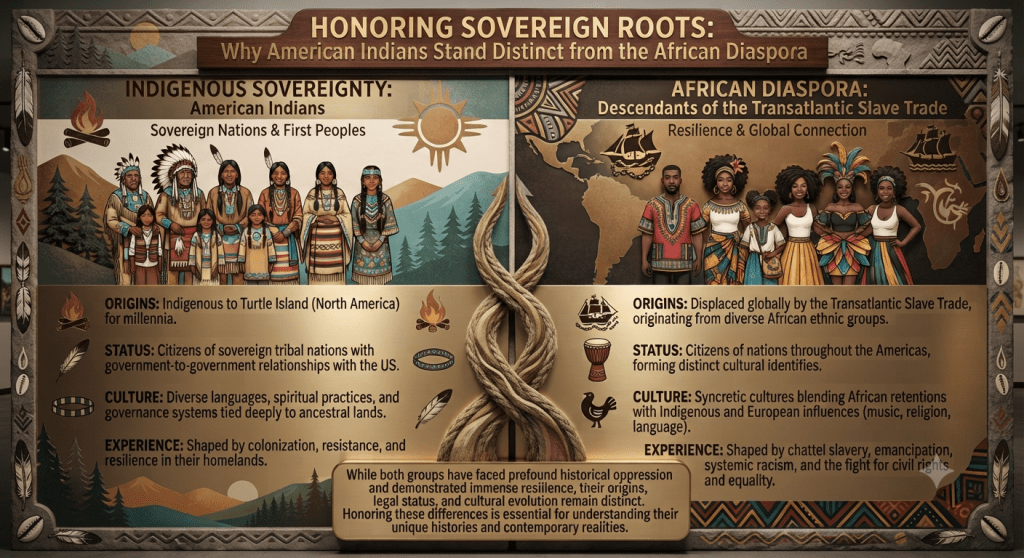
In conversations surrounding ancestry, heritage, and global history, it is common to hear deep discussions about the African diaspora. This term beautifully describes the global dispersion of African peoples throughout history, primarily through the transatlantic slave trade, and the rich, resilient cultures they built worldwide.
However, a well-intentioned but misguided trend has emerged: attempting to fold American Indians—the Indigenous peoples of the Americas—into this global African diaspora narrative. While historical proximity, shared struggles against colonialism, and multi-ethnic intermarriages are real historical facts, American Indians possess a distinct, sovereign identity that stands completely independent of any global diaspora framework. Understanding and respecting this distinction is not just a matter of historical accuracy; it is an act of deep honor and respect for Indigenous sovereignty.
A Matter of Political Sovereignty, Not Just Race
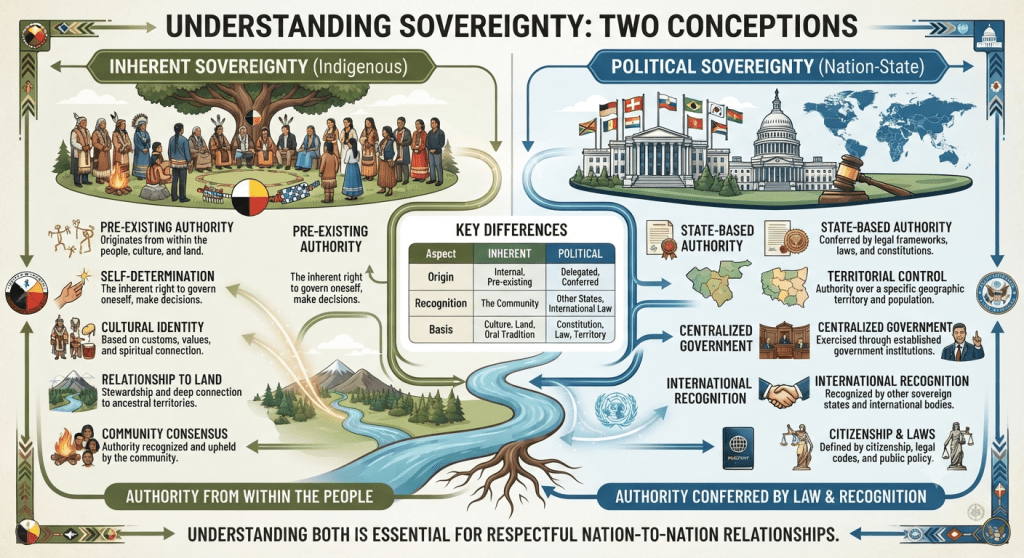
The primary reason American Indians are not part of the African diaspora is rooted in the concept of inherent sovereignty. Diaspora frameworks are typically built around shared global racial categories, transnational migrations, and cultural dispersal.
In contrast, American Indian identity is fundamentally tied to political nationhood, specific geographic ancestral homelands, and continuous tribal governance. Indigenous peoples were self-governing nations with distinct languages, laws, and spiritual traditions thousands of years before European colonization or the forced migration of enslaved Africans. To categorize Native Americans as part of an external diaspora reduces sovereign nations to a generic racial category, effectively erasing their unique political status.
Unraveling the “Paper Erasure” of the Jim Crow South
Much of the confusion today stems from colonial and state bureaucratic records, particularly in the Southern and Mid-Atlantic states. Historically, non-reservation tribal communities—such as the Saponi of the North Carolina and Virginia Piedmont—faced a brutal system of legal and social white supremacy.
To strip Native Americans of their land and treaty rights, Southern states enforced a strict Black-white racial binary. Bureaucrats and census takers systematically refused to write “Indian” on official documents, choosing instead to forcefully label Indigenous individuals as “Mulatto,” “Free Person of Color,” or “Black.”
Today, looking back at those old records and confusing a forced colonial label with a people’s true identity does a grave disservice to history. It mistakes a weapon of bureaucratic erasure for historical truth.
Why Respecting This Boundary is Honorable
Respecting the distinct boundaries of American Indian identity is a profound act of historical and human respect.
- It Protects Sovereign Rights: Recognizing Native Americans as distinct nations upholds their ongoing legal and political battle for self-determination and federal or state recognition.
- It Rejects Colonial Erasure: Refusing to force external theoretical frameworks onto Indigenous people counteracts centuries of government attempts to absorb, dilute, and erase Native identity.
- It Honors True Ancestry: True solidarity does not require merging distinct histories. We can honor the profound history of the African diaspora while simultaneously respecting that American Indians belong to the very soil beneath our feet.
Indigenous American ancestry is a sacred link to the past. Honoring American Indians as the distinct, sovereign peoples they have always been ensures that their unique voices, histories, and rights are preserved for the generations to come


