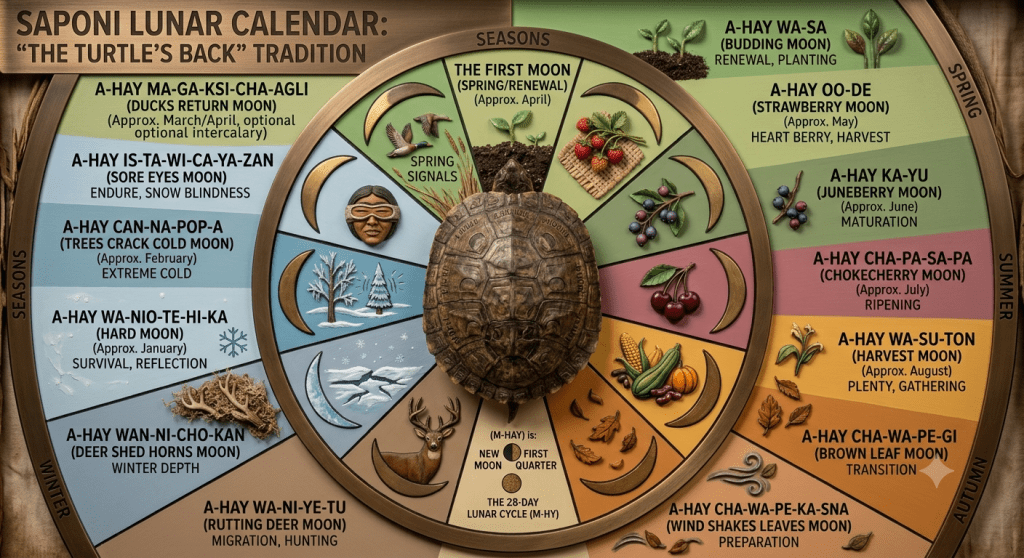
To truly understand historical Saponi life, one must look beyond material culture and examine how they structured time itself. Unlike the fixed, 12-month Gregorian calendar used by European colonists, the Saponi and neighboring Eastern Woodlands peoples relied on a lunar calendar. Time was measured by 13 distinct moon cycles, with each new moon marking a shift in the ecological rhythms of the Virginia and North Carolina Piedmont.
Rather than a passive way to count days, tracking the moon was an active system for survival, agriculture, and spiritual alignment.
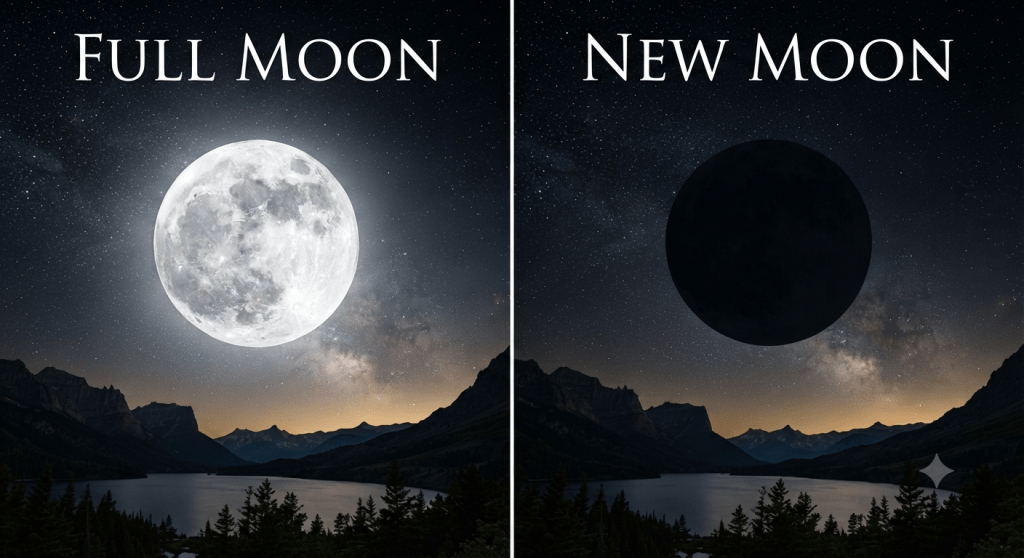
The New Moon: A Time for Inner Renewal
In Saponi tradition, the arrival of the new moon—the dark phase of the lunar cycle—shifts human focus inward. While full moons often host vibrant social gatherings, the new moon is a sacred period of quiet reflection and purification.
- Quiet Healing: The darkness provides a spiritual reset. It is a time for introspection, prayer, and intentionally releasing negative emotions like anger or anxiety accumulated over the past month.
- Purification and Smudging: To welcome the new cycle with a clean slate, families traditionally use sacred medicine plants like sage, cedar, or sweetgrass to smudge their homes and bodies, brushing away stagnant energy.
- Setting Intentions: The new moon is viewed as the ideal time to “plant seeds,” both metaphorically for personal goals and literally for agriculture. As the moon begins to grow (wax), its rising energy is historically favored for planting crops that grow above the ground.
Reading the Piedmont Landscape
Because each new moon initiates a fresh ecological phase, the moons were named after the natural shifts occurring in the surrounding environment. Early colonial explorers in the Piedmont, such as John Lederer in 1670 and William Byrd II in the early 1700s, documented how tightly Native spiritual and daily life revolved around these natural signs.
Instead of January or February, the Saponi tracked time through shifting seasonal markers:


- The Awakening Moons: Early spring moons signaled the flowing of plant sap, the return of migratory birds, and the arrival of the greening grass.
- The Abundance Moons: Summer and autumn moons tracked agricultural milestones, such as the ripening of wild berries, the roasting ear phase of corn, and the falling of leaves.
- The Survival Moons: Winter moons focused on the physical elements, often named for the deep snows, the cracking of frozen trees, or the hunting of specific game when food resources grew scarce.
By aligning their lives with the 13 moons, the Saponi maintained a profound harmony with the earth—a connection that influenced everything from the seasonal materials woven into their clothing to the spiritual intentions set during the quietest nights of the month
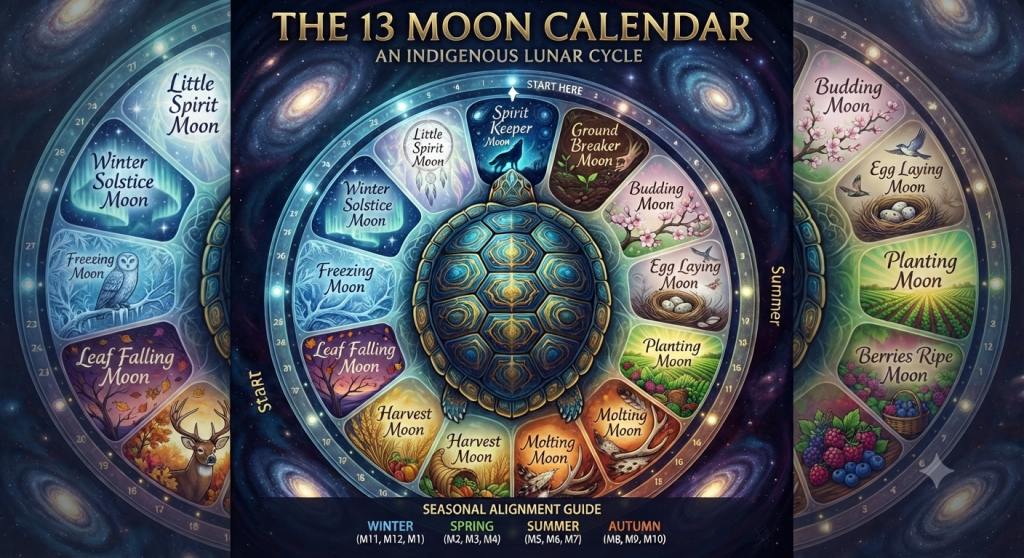
The 13-moon calendar, traditionally read on the 13 large scales (scutes) of a turtle’s back, serves as an ecological and spiritual guide. Each moon reflects the seasonal shifts of the land, weather, and wildlife, showing a deep connection to the flow of life in Eastern Woodlands and Piedmont cultures, including the Saponi people.
The meanings and importance of the 13 moons featured in the calendar image follow a cyclical pattern of awakening, growth, harvest, and rest:
1. Moon of Popping Trees (January)
- Importance: This moon marks the heart of deep winter when extreme freezing causes the sap inside tree trunks to expand and pop audibly. It is a time for indoor storytelling, preservation of resources, and deep reflection during the coldest days.
2. Bear Moon (February)
- Importance: Aligned with the time mother bears give birth to their cubs while still in hibernation. It teaches a lesson in quiet strength, internal vision, and relying on spiritual energy and stored resources to sustain life.
3. Maple Sugar Moon (March)
- Importance: Signals the arrival of early spring when the sap begins to flow through the maple trees. This moon celebrates the “sweetness of life” and serves as a vital reminder to restore balance after a harsh winter.
4. Fishing Moon (April)
- Importance: As the ice fully thaws on rivers and streams, fish (such as suckers) begin their annual spawning runs. Historically, this moon was crucial for survival, providing a fresh source of protein when winter food stores had run completely empty.
5. Flower Moon (May)
- Importance: Celebrates the full awakening of the earth as wild plants and medicinal herbs bloom into life. It is an emotionally uplifting time to explore the spiritual healing powers of nature and the environment.
6. Strawberry Moon (June)
- Importance: Named after the “heart berry,” the first fruit of the season to ripen. This moon represents community, sharing the first harvests, and practicing reconciliation—letting go of past judgments and interpersonal conflicts.
7. Sun Moon (July)
- Importance: Represents the peak of summer and the longest days of sunlight. It is a time of intense growth, high energy, and gratitude for the sun’s power to mature the crops planted in the earth.
8. Green Corn Moon (August)
- Importance: Honors the stage when corn kernels are plump, sweet, and ready for fresh eating, though not yet dry enough to store. It marks the transition into the harvest season, calling for community feasts and dances of thanks.
9. Harvest Moon (September)
- Importance: The time of gathering the main crops—corn, beans, and squash—to prepare for the coming colder months. It emphasizes the cycle of life, hard work, and gathering the physical fruits of summer labor.
10. Hunting Moon (October)
- Importance: As the leaves drop and game animals become more active, communities traditionally pivoted toward hunting and smoking meats. This moon is centered on gathering sustainable proteins for winter survival.
11. Freezing Moon (November)
- Importance: Frost hardens the ground and ice begins to skin over the water. It serves as a stern reminder that nature is shutting down, urging families to complete their final winter preparations.
12. Little Spirit Moon (December)
- Importance: This moon brings short days and long nights. It is a gentle spiritual period designated for healing, spreading positive energy to family, and focusing on mental and physical well-being through dark winter nights.
13. Big Spirit Moon (The “Blue Moon” or Cycle Closer)
- Importance: Acting as a purification and grand finale to the cycle, this moon ties the year together. It represents the ultimate connection to the Creator, spiritual renewal, and a collective cleansing before the natural calendar resets back to the beginning.


