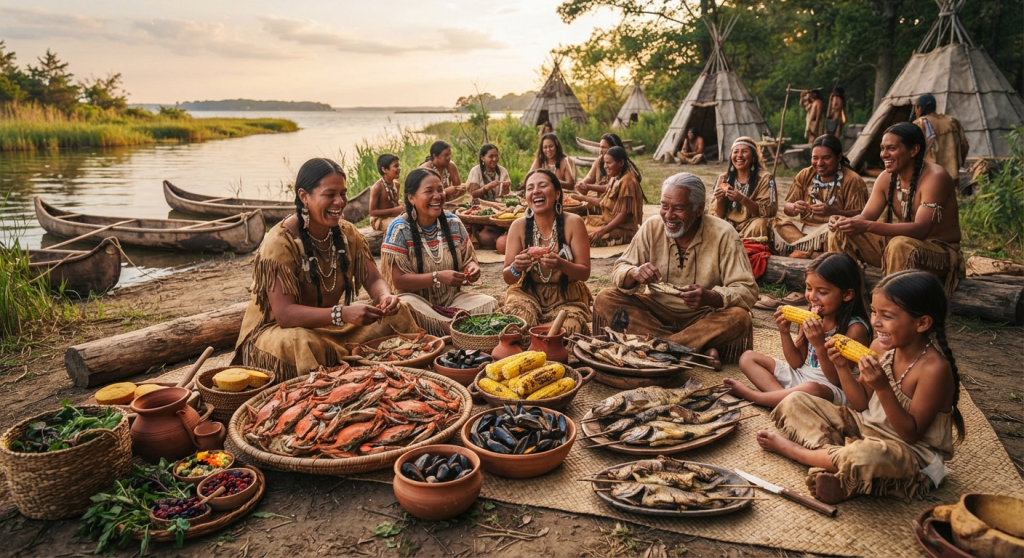
When exploring Indigenous history in the Mid-Atlantic, it is easy to default to general stereotypes about hunting and gathering. But for the Nanticoke people—the “Tidewater People” of the Chesapeake Bay and Delmarva Peninsula—food was deeply tied to a specific coastal ecosystem.
Long before European contact introduced domestic livestock or processed ingredients, the Nanticoke maintained a sophisticated, highly sustainable diet. By relying on brackish waterways, maritime forests, and sandy-soil agriculture, they fueled a thriving society.
Here is a look at the authentic culinary world of the traditional Nanticoke.
1. The Seafood Staples of the Tidewater
The water was the primary pantry for the Nanticoke. Living along rivers, estuaries, and bays, they harvested an incredible abundance of protein:
- Shellfish Reefs: Blue crabs were pulled from shallow grass beds, while oysters and clams were gathered from massive natural reefs. Over generations, the discarded shells formed enormous mounds, known as shell middens, across the Eastern Shore.
- The Spring Spawning Run: Every spring, massive migrations of sturgeon, shad, herring, and eels flooded the rivers. The Nanticoke built complex, woven river weirs (underwater fences) to catch these fish cleanly and efficiently.
2. Wild Waterfowl Instead of Chickens
Many people are surprised to learn that chickens are not native to North America. In pre-colonial times, the primary poultry consisted of wild game birds following the Atlantic Flyway:
- The Migration Harvest: Canada geese, mallards, and canvasback ducks were hunted in the salt marshes.
- Seasonal Delicacies: In the spring, women and children sustainably harvested wild duck and goose eggs from the wetlands, along with turtle eggs found buried in the sandy riverbanks.
3. Coastal Maritime Agriculture
Despite the sandy soil of the coastal plains, Nanticoke women were elite farmers. They utilized companion planting to grow the “Three Sisters”:
- Flint Corn: A hardy, resilient corn that was ground in wooden mortars to make coarse meal for stews, hominy, and boiled breads.
- Climbing Beans & Squash: Beans climbed the corn stalks and fixed nitrogen into the soil, while large pumpkin and squash leaves shaded the ground to prevent weeds and retain moisture.
4. Foraged Resources and Ancient Kitchen Tools
The maritime forests surrounding the communities provided seasonal variety:
- Wild Flora: Blackberries, highbush blueberries, and wild strawberries were gathered all summer. In autumn, hickory nuts and walnuts were collected, crushed, and boiled to create a rich, creamy “hickory milk” used to thicken savory dishes.
- Shell-Tempered Pottery: To cook these meals, Nanticoke potters mixed crushed oyster shells into local clay. This unique temper made their earthenware pots exceptionally strong, allowing them to withstand the high heat of long, slow-simmering open fires.
By understanding the exact foods that sustained the Tidewater People, we gain insight into the resilience, ingenuity, and daily resource management of the region’s original inhabitants.


