Harvesting Memories along the Urban Brook: A Saponi Legacy of Spring Spicebush Tea

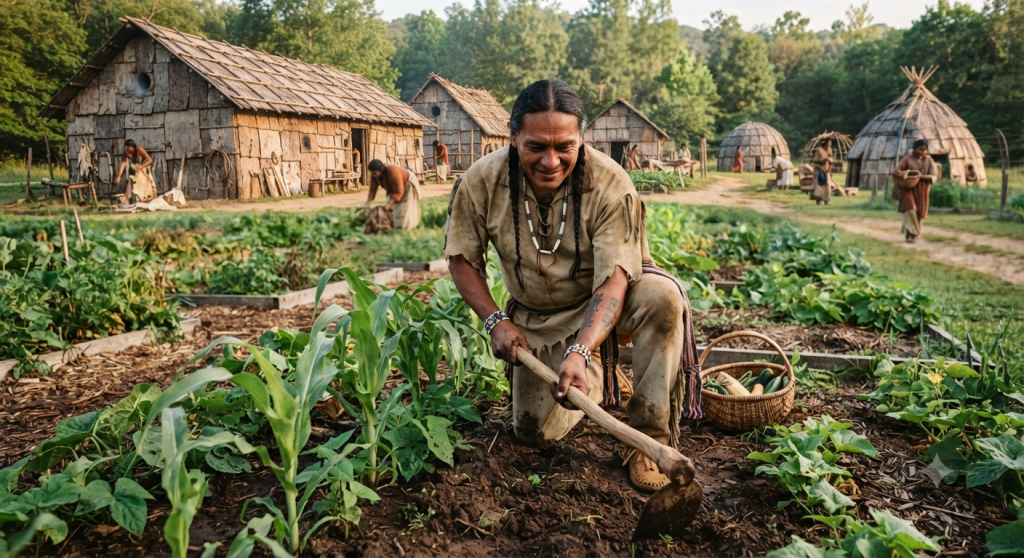
When people think of the inner city, they usually picture concrete, brick, and asphalt. But my great-aunt—a proud Saponi woman who held our family’s ancestral knowledge tight to her chest—looked at our neighborhood through a completely different lens. We lived in the heart of the inner city, right on the border of East Orange and Bloomfield, New Jersey. It was an area carved out by historic brooks and hidden urban waterways feeding into the Second River. To most folks, these urban streams were just a backdrop to the traffic, but to my aunt, they were lifelines where nature stubbornly refused to be paved over.

Even in the middle of our city neighborhood, the damp, shaded soil right along those urban brooks provided the perfect sanctuary for wild plants to thrive. Our foraging walks didn’t require a trek out to a distant forest; we simply walked down the block to where the concrete gave way to mud and running water.

It was there, walking beneath the filtered canopy of the urban understory, that she taught me how to truly see the land. She showed me that our medicine adapts just like our people do. Standing near the rushing brook with the city hum in the background, she would point out the very first gift of the season: spicebush (Lindera benzoin), or “spinebush” as we often called it at home. “The earth always provides what we need, right where we are,” she would tell me. That contrast—the sharp, clean smell of wild citrus and allspice cutting through the heavy city air—became a core memory for me.


Waking Up the Forest: Finding the Yellow Blooms

My aunt always knew the exact moment to gather the twigs. In early spring, long before the green leaves unfurled, the spicebush branches would blanket themselves in clusters of tiny, fuzzy, pale-yellow flowers. They looked like delicate drops of sunlight clinging to the gray-brown wood right above the water of the brook.

She taught me to look for the slender, flexible outermost twigs. As we clipped them cleanly, thanking the bush for its medicine, she would have me scratch the bark with my thumbnail. Instantly, a bright, warming scent would burst into the crisp air—a beautiful, complex aroma that carried a deep allspice warmth mixed with a clean, zesty hint of citrus.


The Woodland Medicine of the Saponi

For Eastern Siouan peoples like the Saponi, spicebush twig tea was much more than a comforting drink. It was a vital, mandatory “spring tonic” utilized to wake up the body after a long, stagnant winter of heavy, preserved foods.

My aunt would explain the healing power locked inside that aromatic bark as we walked back from the brook:

  • Settling the Stomach: The volatile oils act as a natural carminative, instantly relaxing the stomach muscles to eliminate nausea, bloating, and painful cramps.
  • Breaking Fevers: Known historically to early botanists as “fever bush,” a hot cup promotes therapeutic sweating, helping the body naturalize its temperature during colds or flu.
  • Clearing the Lungs: Breathing in the steam from the pot opens up clogged sinuses, thins deep mucus, and calms persistent, hacking coughs.
  • Easing Body Aches: As a gentle circulatory stimulant, the warming brew moves blood through sluggish systems, easing winter joint stiffness and muscle fatigue.

Keeping the Tradition: How to Prepare Spicebush Tea

The magic of my aunt’s recipe lay in how she coaxed the delicate, heat-sensitive citrus oils out of the wood without letting them escape into the air. Here is exactly how she taught me to prepare it, whether using fresh spring twigs from the brook or pre-dried segments:

  1. The Prep: Take a small handful of twigs and snap or cut them into short, 1-inch pieces. Gently crush or bruise the segments with the back of a spoon to crack the outer bark wide open.
  2. The Cold Start: Place 1 tablespoon of dried twigs (or a small handful of fresh ones) into a pot, and pour cold water directly over them. Heating the twigs slowly with the water ensures the deepest extraction.
  3. The Low Simmer: Bring the pot to a gentle boil, then immediately turn the heat down to low.
  4. Trap the Steam (Crucial Step): Cover the pot with a tight lid. The citrus notes live entirely in the essential oils of the steam. Leaving it uncovered means your medicine will float away into the room instead of staying in your cup.
  5. The Timing: Let it simmer softly under the lid for 12 to 15 minutes until the water turns a stunning, clear amber-gold.

When you strain it into your mug, you are left with a tea that is naturally smooth, mellow, and perfectly balanced by that unmistakable citrus finish. Taking a sip always transports me right back to those muddy inner-city brooks, walking side-by-side with a woman who ensured our connection to the earth would never be forgotten.
The True Nanticoke Diet: How the Tidewater People Sustained Themselves

When exploring Indigenous history in the Mid-Atlantic, it is easy to default to general stereotypes about hunting and gathering. But for the Nanticoke people—the “Tidewater People” of the Chesapeake Bay and Delmarva Peninsula—food was deeply tied to a specific coastal ecosystem.

Long before European contact introduced domestic livestock or processed ingredients, the Nanticoke maintained a sophisticated, highly sustainable diet. By relying on brackish waterways, maritime forests, and sandy-soil agriculture, they fueled a thriving society.

Here is a look at the authentic culinary world of the traditional Nanticoke.

1. The Seafood Staples of the Tidewater

The water was the primary pantry for the Nanticoke. Living along rivers, estuaries, and bays, they harvested an incredible abundance of protein:

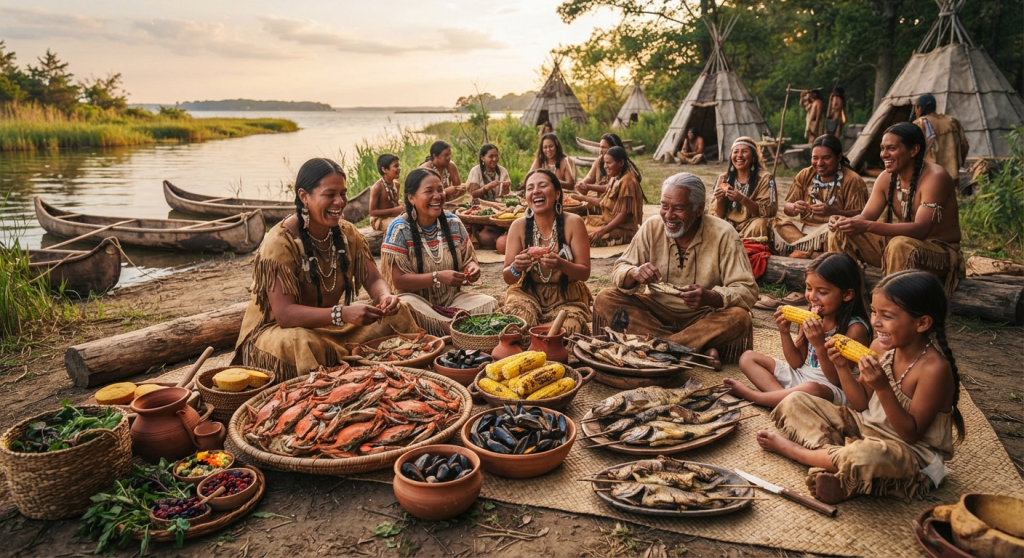
  • Shellfish Reefs: Blue crabs were pulled from shallow grass beds, while oysters and clams were gathered from massive natural reefs. Over generations, the discarded shells formed enormous mounds, known as shell middens, across the Eastern Shore.
  • The Spring Spawning Run: Every spring, massive migrations of sturgeon, shad, herring, and eels flooded the rivers. The Nanticoke built complex, woven river weirs (underwater fences) to catch these fish cleanly and efficiently.

2. Wild Waterfowl Instead of Chickens

Many people are surprised to learn that chickens are not native to North America. In pre-colonial times, the primary poultry consisted of wild game birds following the Atlantic Flyway:

  • The Migration Harvest: Canada geese, mallards, and canvasback ducks were hunted in the salt marshes.
  • Seasonal Delicacies: In the spring, women and children sustainably harvested wild duck and goose eggs from the wetlands, along with turtle eggs found buried in the sandy riverbanks.

3. Coastal Maritime Agriculture

Despite the sandy soil of the coastal plains, Nanticoke women were elite farmers. They utilized companion planting to grow the “Three Sisters”:

  • Flint Corn: A hardy, resilient corn that was ground in wooden mortars to make coarse meal for stews, hominy, and boiled breads.
  • Climbing Beans & Squash: Beans climbed the corn stalks and fixed nitrogen into the soil, while large pumpkin and squash leaves shaded the ground to prevent weeds and retain moisture.

4. Foraged Resources and Ancient Kitchen Tools

The maritime forests surrounding the communities provided seasonal variety:

  • Wild Flora: Blackberries, highbush blueberries, and wild strawberries were gathered all summer. In autumn, hickory nuts and walnuts were collected, crushed, and boiled to create a rich, creamy “hickory milk” used to thicken savory dishes.
  • Shell-Tempered Pottery: To cook these meals, Nanticoke potters mixed crushed oyster shells into local clay. This unique temper made their earthenware pots exceptionally strong, allowing them to withstand the high heat of long, slow-simmering open fires.

By understanding the exact foods that sustained the Tidewater People, we gain insight into the resilience, ingenuity, and daily resource management of the region’s original inhabitants.

The Eternal Stew Pot: Understanding What Was Cooked in the Saponi Diet

When we look back at the ancestral foodways of the Saponi and other Eastern Woodland communities, one thing becomes immediately clear: their kitchen was defined by heat, smoke, and water. While modern raw-food trends emphasize eating plants exactly as they come out of the earth, the traditional Saponi diet relied almost entirely on cooking.

Cooking was not just a preference; it was a necessity for survival, food preservation, and community life. Apart from fresh, seasonal berries, foraged greens, and raw nuts eaten straight from the tree, nearly every staple of the Saponi diet passed through fire.


The Staples: Why the “Three Sisters” Needed Fire

The foundation of the Saponi diet rested on the agricultural triad of corn, beans, and squash—affectionately known as the Three Sisters. None of these were eaten raw.

  • Corn (Maize): Corn was never just eaten fresh off the cob. It was dried, stored, and then processed. Grains were nixtamalized (cooked with wood ash) to make hominy, or ground into a fine meal. This meal was then boiled into thick porridges or mixed with water to form a dough. This dough was wrapped in leaves or placed directly under hot coals to bake into ashcakes.
  • Beans and Squash: Dried beans and fibrous winter squashes required long, slow heat to become digestible. They were tossed into large earthenware vessels and boiled for hours until they broke down into a thick, nutrient-dense base.
  • Wild Roots and Tubers: Foraged starches like wild sweet potatoes, groundnuts, and tuckahoe roots could be toxic or completely indigestible if eaten raw. The Saponi used earth ovens—pits dug into the ground, lined with fire-heated rocks, covered in leaves and dirt—to slow-bake these tubers for days, transforming tough starch into sweet, edible fuel.

Meats, Fish, and the Continuous Fire

The Saponi were skilled hunters and fishers, and their protein sources were strictly subjected to high heat. Raw meat or raw fish consumption was nonexistent.

  • Open-Fire Roasting: Large game like venison (deer), elk, and bear were cut into strips or placed on large wooden spits over open flames. The intense heat melted away fat, which was carefully caught and saved, while the smoke infused the meat.
  • Smoking and Dehydration: To prepare for the lean winter months, fish and game were placed on elevated wooden racks over slow-burning, smoldering fires. This slow-cooking and smoking process removed moisture, curing the meat so it could be packed away without spoiling.
  • The Communal Stew Pot: The heart of the Saponi home was a large clay pot that simmered continuously near the fire. As hunters brought back small game (rabbit, squirrel, wild turkey) and foragers brought back mushrooms or wild onions, they were chopped up and added straight to the pot. This created a perpetual, fully-cooked stew available to the family around the clock.

Seasoning the Hearth: Native Flavors

Without access to imported salt or modern spices, the Saponi relied heavily on the natural ecosystem of the Piedmont region to flavor their cooked dishes. Flavoring was added directly to the boiling stews or rubbed onto roasting meats.

  • Wild Alliums: Wild onions, ramps, and wild garlic were harvested in abundance and tossed whole into boiling pots, providing a sharp, savory depth to meats and corn dishes.
  • Herbal Infusions: Leaves from plants like wild spicebush, sumac berries (which gave a tart, lemony flavor), and wild ginger roots were crushed and brewed directly into stews and teas.
  • Fat and Oils: Flavor and richness came from rendering the fat of bears and deer. Additionally, hickory nuts and acorns were crushed in water to create a rich, white nut milk. This creamy liquid was skimmed off and used as a rich broth base for boiling corn and vegetables, acting much like a native butter or cream.

The Rhythm of the Seasons: Fresh vs. Dried

The methods used to cook these foods shifted dramatically depending on the time of year, balancing the consumption of fresh harvests with carefully preserved winter rations. SAPONI COOKING CYCLE [SPRING / SUMMER] [AUTUMN / WINTER] Fresh game, greens, berries Dried corn, beans, smoked meats │ │ ▼ ▼ Quick Roasting & Hours of Slow Leaf-Steam Cooking Boiling & Stewing

  • The Spring and Summer Thaw: As the earth woke up, cooking methods were lighter and quicker. Freshly caught river fish were wrapped in wet green leaves and buried under hot embers to steam in their own juices. Fresh wild greens and early small game were flash-cooked or lightly boiled.
  • The Autumn and Winter Lock: As the cold set in, cooking became an exercise in patience and preservation. The diet shifted almost completely to dried ingredients. Dried venison, dried berries, and hardened corn required hours of slow-boiling to rehydrate. The continuous stew pot became the primary source of warmth and nutrition, running day and night to keep the community nourished through the winter.

By understanding the intense care, time, and elemental fire required to prepare the Saponi diet, we gain a deeper appreciation for how these ancestral communities synchronized their lives with the natural world.

The Real “Wild Greens” of the Saponi Diet

Instead of collards, ancestral Saponi foragers collected highly nutritious wild greens native to the Piedmont and Virginia woodlands: [1]

  • Poke Salat (Pokeweed): The young leaves of pokeweed were heavily gathered in the spring. Because the plant carries natural toxins, the Saponi boiled the greens in multiple changes of water to make them safe and tender before adding them to stews. [1]
  • Wild Mustard and Cress: Native wild mustard greens provided a peppery, spicy punch to slow-cooked corn and meat stews. [1]
  • Lamb’s Quarters (Wild Spinach): This native wild green is incredibly rich in minerals. The leaves were tossed directly into the communal clay pots to act as a salty, savory vegetable base. [1]
  • Purslane: Growing abundantly in loose soil, native purslane leaves were added to boiling stews as a thickener and nutrient booster. [1]

The Evolution: Collards and Modern Saponi Culture

While collard greens are not an ancient ancestral crop, they became deeply woven into the agricultural traditions of living descendants like the Haliwa-Saponi Indian Tribe. [1]

Over the centuries, as tribal communities adapted to shifting landscapes and blended agricultural techniques, collards became a fundamental home-garden staple. Today, modern tribal elders work alongside conservation projects like the North Carolina Native Plant Studies program to protect both ancestral wild plants and culturally adopted heirloom crops like collards.

From the Sea to the Smokehouse: The Ancient Art of Indigenous Powdered Crabmeat

For the indigenous peoples of the Eastern Woodlands, survival required a deep, scientific understanding of the natural world. Long before the advent of modern refrigeration or vacuum sealing, coastal tribes like the Nanticoke of the Chesapeake Bay and inland nations like the Saponi of the Piedmont region mastered the complex chemistry of food preservation.

One of their most ingenious innovations was the transformation of highly perishable blue crabs into a lightweight, shelf-stable, and nutrient-dense powder.

Whether packed into oiled deer-hide pouches for long trade journeys or mixed with fats for harsh winter survival, this ancient technique stands as a testament to indigenous culinary brilliance. Here is the complete traditional method of creating and preserving powdered crabmeat, adapted for the modern kitchen.


🪵 The Mechanics of Indigenous Preservation

Traditional indigenous smoking was never about fast cooking or backyard barbecuing; it was an exercise in extreme patience and moisture control. The process relied on three distinct layers of defense to keep the seafood stable for months:

  1. Deep Dehydration: Continuous, low-temperature heat slowly extracted moisture from deep within the crab fibers, completely stopping the growth of bacteria and mold.
  2. The Phenol Shield: As green hardwoods smoldered, they released natural wood chemicals (like phenols) that coated the meat, acting as a natural antimicrobial disinfectant.
  3. Pest Barrier: Thick rising smoke acted as a literal forcefield, keeping flies and yellowjackets away from the delicate meat while it dried over several days.

🥘 Step-by-Step Guide to Traditional Powdered Crab

🧰 Supplies Needed

  • Fresh Blue Crabs: The sweet, authentic cornerstone of Eastern Woodlands coastal cuisine.
  • Green Hardwood: Hickory, white oak, or maple chips (avoid pine or softwoods, which ruin the flavor and leave sticky resin).
  • Fine Mesh Grates: Food-safe bamboo mats or stainless steel wire mesh.
  • Stone Mortar and Pestle: For grinding the dehydrated meat.
  • Airtight Storage Containers: Vacuum bags or glass jars (historically, animal bladders or oiled leather pouches).

Step 1: The Blanch and Pick

To ensure the delicate crab meat doesn’t completely disintegrate or melt through your smoking racks, it needs a light, brief parboiling to set the proteins.

  1. Bring a large pot of water to a rolling boil. To honor historical coastal methods, you can flavor the water with clean sea salt, wild onions, or local sea herbs.
  2. Submerge live blue crabs in the boiling water for 3 to 5 minutes—just until the shells flash a bright orange.
  3. Immediately plunge the crabs into an ice bath to halt the cooking process.
  4. Carefully pick the meat from the shells, keeping the pieces as whole and clean as possible.

Step 2: The Cold-Smoke Dehydration

This is the most critical stage of the entire preservation process. The temperature must remain exceptionally low. You are drying the meat, not baking it.

  1. Fire up the smoker: Keep your smoker or dehydration chamber strictly between 110°F and 140°F (43°C to 60°C). Use damp hardwood pieces to create a dense, cool, smoldering smudge.
  2. Arrange the crabmeat: Spread the picked meat in a single, sparse layer across your woven mats or mesh screens. Ensure no two pieces are touching so air can circulate completely.
  3. The Smoke Cure: Leave the racks far above the smoldering coals. Let the meat smoke continuously for 12 to 24 hours.
  4. The Dryness Test: The crabmeat is done when it loses 100% of its flexibility. It must feel completely hard, feather-light, and snap cleanly like a dry twig when bent. If it bends or feels spongy, return it to the smoke.

Step 3: Stone Pulverization

Moisture is the ultimate enemy of shelf-stability. Ensure your grinding tools and hands are completely bone-dry before beginning this step.

  1. Transfer your brittle, smoke-cured crab segments into a clean stone mortar.
  2. Using a heavy pestle, crush the meat into a coarse rubble using a firm, downward stamping motion.
  3. Shift to a heavy, circular grinding motion. Press the rubble firmly against the abrasive stone walls until it breaks down into a fine, flour-like powder.
  4. Sift the powder through a fine sieve or basket to remove any stubborn fibers or stray bits of shell, then regrind whatever is left behind.

Step 4: Storing for the Seasons

Once your crab meat has been turned into a fine powder, choose one of two historical storage pathways:

Style A: Pure Umami Powder (Inland Trade Style)

Pack the pure, dry powder tightly into an airtight jar or pouch. Kept in a cool, dark, and dry environment, this concentrated seafood base remains stable for months. This was the preferred style for the inland Saponi tribe, who carried the lightweight powder along trading paths to instantly elevate simple corn mush.

Style B: Seafood Pemmican (Winter Survival Style)

To turn your powder into an emergency, high-energy survival ration designed to withstand freezing winters, use this historical blending technique:

  1. Melt high-quality rendered fat (such as beef tallow, pork lard, or historically, bear grease).
  2. Thoroughly mix 2 parts crab powder with 1 part melted fat.
  3. Mix in a small handful of thoroughly dehydrated, crushed wild berries (like blueberries or persimmons) for natural acidity and vitamins.
  4. Press the mixture firmly into small cakes and allow them to completely cool and solidify. The hardened fat completely seals out oxygen, keeping the protein edible for the long winter ahead.

🍲 Bringing the Powder Back to Life

When it was time to eat, indigenous cooks didn’t eat the powder dry. Instead, they tossed 2 to 3 tablespoons of the powdered crab meat directly into boiling clay pots of Three Sisters Stew (corn hominy, beans, and wild squash).

The boiling broth instantly rehydrated the powder, thickening the soup while releasing a rich, deeply savory, smoky seafood umami flavor that brought the taste of the coast straight into the heart of the winter forest.

The Fighting Gamecock’s Choice: How Our Ancestors Fought for Freedom in the Revolutionary War

When we look back at our family history, every generation has a story of resilience. But during the American Revolution, our family’s legacy of independence turned into a story of absolute battlefield bravery.

By digging into the original federal military pension files of the early 1800s, we can uncover the jaw-dropping story of three of Joane Scott’s grandsons: James, David, and Isham Scott.

These men weren’t just soldiers—they were elite partisan fighters who helped turn the tide of the war in the American South.

The Backstory: From Courtroom to Campfire

Two generations after our matriarch, Joane Scott, won her freedom in a 1695 Virginia courtroom, her grandsons had established deep roots as independent farmers along the North Carolina and Virginia border.

But in the late 1770s, as the British Army launched its brutal “Southern Campaign” to crush the American rebellion, the Scott cousins laid down their farming tools and picked up their muskets.

They joined the Southern Militia and found themselves serving under one of the most legendary, ruthless guerrilla leaders in American history: General Thomas Sumter, famously known as the “Fighting Gamecock.”

Guerrilla Warfare in the Carolinas

Serving under General Sumter wasn’t for the faint of heart. Sumter didn’t fight standard European-style battles. Instead, his troops launched fast, devastating hit-and-run ambush attacks against British supply lines and loyalist forces across the swamps and woods of the Carolinas.

James, David, and Isham Scott fought through some of the most intense, chaotic guerrilla warfare of the war. They risked everything to defend the land their family had spent nearly a century building.

The Ultimate Paper Trail: What the Pension Records Prove

For genealogists, a Revolutionary War pension application is pure gold. To get their monthly veteran checks in the early 1800s, the Scott brothers had to stand in front of a county judge and verbally map out their entire lives.

Their sworn testimonies solve two massive mysteries for our family tree:

  1. Our North Carolina Roots: In their statements, the brothers trace their pre-war lives directly to Halifax County, North Carolina—the region immediately bordering our family’s home base in Granville and Warren counties. This places the Scotts firmly in the Piedmont region alongside the Saponi Nation.
  2. The Great Family Split: The pension records reveal a fascinating post-war twist. General Sumter was so deeply impressed by the loyalty and fighting capability of the Scott men that after the war ended, he personally invited them to help settle a massive tract of land he owned in South Carolina.

One Family, Two Powerful Legacies

Because of General Sumter’s offer, the Scott family line split into two distinct branches:

  • The Southern Branch: James and David Scott accepted the General’s offer, uprooting from North Carolina to settle in the Sumter District, South Carolina. There, they founded a legendary, tightly knit community that successfully fought the state government for decades to protect their freedom and resist discriminatory taxes.
  • The Northern Branch: The rest of the family chose to stay right in the North Carolina Piedmont. They remained in the Granville and Warren County areas, continuously operating as independent, land-owning Saponi yeoman farmers—the exact line that leads to Chashe Scott, Emeline Bookram, and down to us today.

Whether they stayed in the North Carolina soil or marched south with General Sumter, Joane Scott’s grandsons proved that the family’s independent spirit could never be broken.

Hidden History: How the Native Word Yésah Survived

Ancestors of the Meadows: The Resilience of the Saponi People

The story of the Saponi Tribe and their modern descendants, the Haliwa-Saponi of Warren and Halifax counties, North Carolina, is a powerful testament to indigenous survival. Despite centuries of colonial expansion, land theft, and bureaucratic erasure, the core families of this Piedmont nation successfully protected their identity, culture, and sovereignty.

Here is a look at the history, traditions, and enduring spirit of the Saponi people.

1. Opposing Worldviews: The Stealing of Ancestral Land

The conflict between the Saponi and European immigrants stems from two completely incompatible definitions of the earth:

  • The Saponi Worldview: The land was viewed as a living, sacred relative. The tribe practiced communal custodianship rather than private ownership, rotating crops and leaving large forest tracts intact to maintain natural harmony.
  • The Immigrant Takeover: Guided by the international legal framework of the Doctrine of Discovery, European colonists viewed any land not occupied by Christians as legally vacant (terra nullius). Driven by an economic system where wealth was measured in private property, immigrants aggressively fenced off territories, cleared the forests for timber, and claimed exclusive rights to the soil through written deeds.

2. Geographic Refuge and “Paper Genocide”

Faced with total displacement from their traditional Piedmont villages, Saponi families retreated into the isolated, swampy lowlands of Warren and Halifax counties—an area known historically as “The Meadows.”

  • Hiding in Plain Sight: In this rugged terrain, core ancestral families like the Hedgepeths, Richardsons, Lynches, and Evanses formed a close-knit, self-protective enclave. During the colonial era, they actively sheltered and integrated escaped African slaves and white indentured servants rather than adopting chattel slavery.
  • Bureaucratic Erasure: Throughout the 1800s, the state of North Carolina enforced a strict racial binary. On official census records, courthouse officials stripped away the classification of “Indian” from landless Saponi descendants, legally reclassifying them as “Free Persons of Color” or “Mulatto” to systematically erase their native birthright and land claims on paper.

3. Surviving the Jim Crow Era

During the late 19th and mid-20th centuries, the systemic taking of land and identity reached a legal peak through tri-racial segregation:

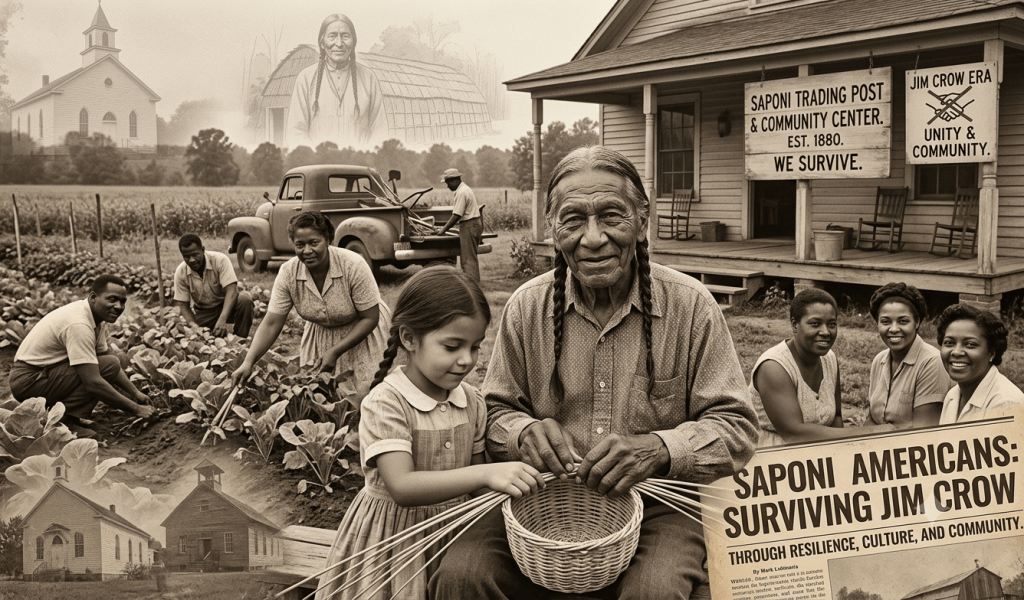
  • Educational and Legal Barriers: Local school boards built facilities only for white and Black children, barring Saponi children from white schools while families refused to send them to Black schools to prevent the legal erasure of their heritage. Furthermore, corrupt land speculators used high property tax traps and predatory contracts to seize valuable family farms from illiterate elders.
  • The Fight for Sovereignty: To survive, the community pooled their resources to build independent institutions. In 1948, they established Mt. Bethel Indian Baptist Church as their political and spiritual headquarters. In 1957, utilizing their own labor and lumber, they built the Haliwa Indian School in Hollister. These actions legally proved their continuous tribal existence, breaking the back of Jim Crow locally and securing North Carolina State Recognition on April 15, 1965.

4. Sacred Traditions and Cosmic Alignment

Throughout these centuries of displacement, the Saponi kept their core spiritual cosmology alive in private:

  • The Rhythm of the Moon: The Saponi used lunar cycles as a precise environmental guide, naming moons after seasonal shifts, animal migrations, and agricultural milestones (like the Green Corn Moon). Generations of grandmothers passed down oral traditions of tracking the moon’s phases and its specific “body signs” to guide hair cutting, medical choices, and daily chores.
  • The “Man of the Signs”: When printed farmers’ almanacs became available in the 18th century, indigenous families integrated them completely. They mapped the lunar cycle to a head-to-toe wave of physical energy, using the almanac to ensure sensitive tasks were done when the moon’s energy was far away from the affected body part.
  • Sacred Music & Wind Instruments: Wind instruments, particularly block-style flutes carved from red cedar and traditional river cane, played an essential role in courtship, healing, and ceremony. Elders like master craftsman Arnold Richardson have kept these ancient Eastern Woodlands melodies alive into the modern era.
  • Animal Kinship and Totems: The Saponi operated under a matrilineal clan system where lineage protectors (such as the Bear, Deer, or Turtle) dictated social responsibilities. Dogs were uniquely revered as the ultimate symbols of fidelity and spiritual protection, serving as guardians in the material world and companions along the Milky Way (the “Spirit Path”) in the afterlife.
  • Sacred Tobacco & Pine Smoke: The tribe used native tobacco (Nicotiana rustica) and botanical smoking blends (Kinnikinnick) strictly as sacred medicine to deliver prayers to the Creator and seal binding diplomatic agreements. Meanwhile, pine smoke—rich in natural alpha-pinene—was utilized to open airways, clear mental fog, and provide antimicrobial air cleansing within the home.

Hidden in Plain Sight: The Story of “Yésah” and “Yessir”

In the history of the American South, survival often required a brilliant form of camouflage. For the ancestors of the Haliwa-Saponi, Occaneechi, and Tutelo peoples who took refuge along Shocco Creek and the lowlands of the Warren County Meadows, protecting their identity meant learning to speak in double meanings.

There is no greater example of this than the deep, hidden connection between the ancestral word Yésah and the Southern expression “yessir.”

Two Words, Two Worlds

In the traditional Eastern Siouan language (Yesá:sahį́), the native word for the tribe is Yésah (often pronounced Yee-sah or Yee-shą́). It does not mean a political boundary or a legal definition on a piece of paper; it translates simply and profoundly to “The People” or “The Human Beings.” It was a badge of absolute sovereignty and ancestral pride.

As the 1800s arrived and the strict racial laws of the pre-Civil War and Jim Crow eras took hold, speaking a Native American language in public became incredibly dangerous. Openly identifying as an Indian could lead to a family’s land being stripped away, physical violence, or legal arrest by county officials who were determined to enforce a strict black-and-white binary.

To survive, the families of the Shocco community had to hide their language in plain sight.

The Power of Linguistic Camouflage

Because the English contraction for “Yes, sir” slurs heavily in rural Southern dialects into “Yessah” or “Yessuh,” your ancestors discovered a phonetic shield.

When a tribal elder or a child used the sacred word Yésah to identify themselves or their community, to the untrained ear of a white planter or a county sheriff, it sounded exactly like a polite, submissive Southern drawl saying “Yessir.”

This created a powerful double meaning that allowed the community to declare their humanity right in front of the people oppressing them:

  • To the white outsider, the word sounded like compliance: “Yes, sir.”
  • To the tribal community, the word whispered resistance: “We are the human beings. We are The People.”

An Unbroken Vibration

This practice is what historians and linguists call linguistic camouflage. When a dominant culture tries to violently stamp out a language, the surviving group will subconsciously map their old, sacred sounds onto the vocabulary of the new language. By leaning heavily into the Southern custom of saying “yessir,” the ancestors kept the physical mouth-movements, the cadence, and the spiritual vibration of Yésah alive without drawing dangerous attention to their roots.

When we look back at the way our grandmothers and elders spoke in Warren County, we aren’t just hearing a rural accent. We are hearing the unbroken echo of an ancient language that refused to be erased.