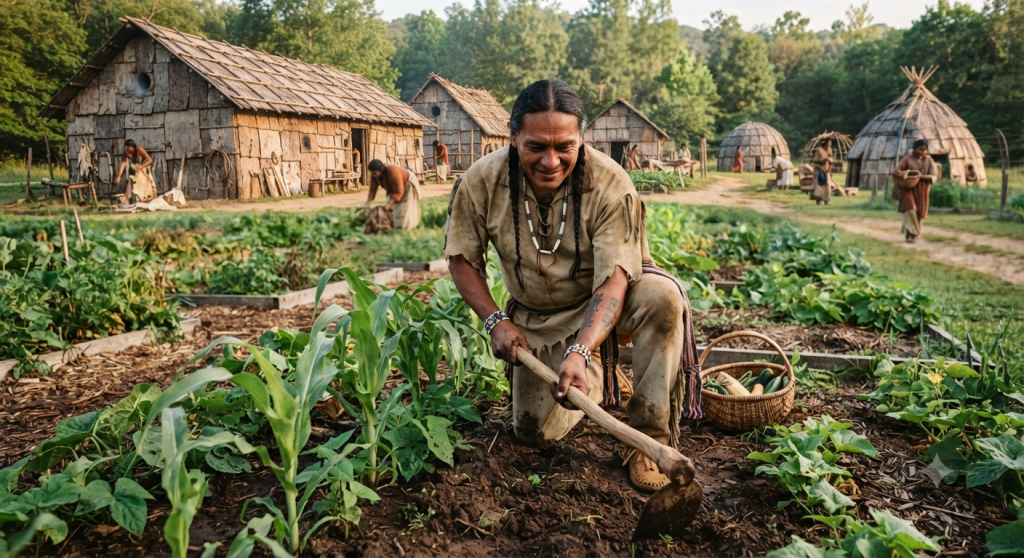
For the indigenous peoples of the Eastern Woodlands, survival required a deep, scientific understanding of the natural world. Long before the advent of modern refrigeration or vacuum sealing, coastal tribes like the Nanticoke of the Chesapeake Bay and inland nations like the Saponi of the Piedmont region mastered the complex chemistry of food preservation.
One of their most ingenious innovations was the transformation of highly perishable blue crabs into a lightweight, shelf-stable, and nutrient-dense powder.
Whether packed into oiled deer-hide pouches for long trade journeys or mixed with fats for harsh winter survival, this ancient technique stands as a testament to indigenous culinary brilliance. Here is the complete traditional method of creating and preserving powdered crabmeat, adapted for the modern kitchen.
🪵 The Mechanics of Indigenous Preservation
Traditional indigenous smoking was never about fast cooking or backyard barbecuing; it was an exercise in extreme patience and moisture control. The process relied on three distinct layers of defense to keep the seafood stable for months:
- Deep Dehydration: Continuous, low-temperature heat slowly extracted moisture from deep within the crab fibers, completely stopping the growth of bacteria and mold.
- The Phenol Shield: As green hardwoods smoldered, they released natural wood chemicals (like phenols) that coated the meat, acting as a natural antimicrobial disinfectant.
- Pest Barrier: Thick rising smoke acted as a literal forcefield, keeping flies and yellowjackets away from the delicate meat while it dried over several days.
🥘 Step-by-Step Guide to Traditional Powdered Crab
🧰 Supplies Needed
- Fresh Blue Crabs: The sweet, authentic cornerstone of Eastern Woodlands coastal cuisine.
- Green Hardwood: Hickory, white oak, or maple chips (avoid pine or softwoods, which ruin the flavor and leave sticky resin).
- Fine Mesh Grates: Food-safe bamboo mats or stainless steel wire mesh.
- Stone Mortar and Pestle: For grinding the dehydrated meat.
- Airtight Storage Containers: Vacuum bags or glass jars (historically, animal bladders or oiled leather pouches).
Step 1: The Blanch and Pick
To ensure the delicate crab meat doesn’t completely disintegrate or melt through your smoking racks, it needs a light, brief parboiling to set the proteins.
- Bring a large pot of water to a rolling boil. To honor historical coastal methods, you can flavor the water with clean sea salt, wild onions, or local sea herbs.
- Submerge live blue crabs in the boiling water for 3 to 5 minutes—just until the shells flash a bright orange.
- Immediately plunge the crabs into an ice bath to halt the cooking process.
- Carefully pick the meat from the shells, keeping the pieces as whole and clean as possible.
Step 2: The Cold-Smoke Dehydration
This is the most critical stage of the entire preservation process. The temperature must remain exceptionally low. You are drying the meat, not baking it.
- Fire up the smoker: Keep your smoker or dehydration chamber strictly between 110°F and 140°F (43°C to 60°C). Use damp hardwood pieces to create a dense, cool, smoldering smudge.
- Arrange the crabmeat: Spread the picked meat in a single, sparse layer across your woven mats or mesh screens. Ensure no two pieces are touching so air can circulate completely.
- The Smoke Cure: Leave the racks far above the smoldering coals. Let the meat smoke continuously for 12 to 24 hours.
- The Dryness Test: The crabmeat is done when it loses 100% of its flexibility. It must feel completely hard, feather-light, and snap cleanly like a dry twig when bent. If it bends or feels spongy, return it to the smoke.
Step 3: Stone Pulverization
Moisture is the ultimate enemy of shelf-stability. Ensure your grinding tools and hands are completely bone-dry before beginning this step.
- Transfer your brittle, smoke-cured crab segments into a clean stone mortar.
- Using a heavy pestle, crush the meat into a coarse rubble using a firm, downward stamping motion.
- Shift to a heavy, circular grinding motion. Press the rubble firmly against the abrasive stone walls until it breaks down into a fine, flour-like powder.
- Sift the powder through a fine sieve or basket to remove any stubborn fibers or stray bits of shell, then regrind whatever is left behind.
Step 4: Storing for the Seasons
Once your crab meat has been turned into a fine powder, choose one of two historical storage pathways:
Style A: Pure Umami Powder (Inland Trade Style)
Pack the pure, dry powder tightly into an airtight jar or pouch. Kept in a cool, dark, and dry environment, this concentrated seafood base remains stable for months. This was the preferred style for the inland Saponi tribe, who carried the lightweight powder along trading paths to instantly elevate simple corn mush.
Style B: Seafood Pemmican (Winter Survival Style)
To turn your powder into an emergency, high-energy survival ration designed to withstand freezing winters, use this historical blending technique:
- Melt high-quality rendered fat (such as beef tallow, pork lard, or historically, bear grease).
- Thoroughly mix 2 parts crab powder with 1 part melted fat.
- Mix in a small handful of thoroughly dehydrated, crushed wild berries (like blueberries or persimmons) for natural acidity and vitamins.
- Press the mixture firmly into small cakes and allow them to completely cool and solidify. The hardened fat completely seals out oxygen, keeping the protein edible for the long winter ahead.
🍲 Bringing the Powder Back to Life

When it was time to eat, indigenous cooks didn’t eat the powder dry. Instead, they tossed 2 to 3 tablespoons of the powdered crab meat directly into boiling clay pots of Three Sisters Stew (corn hominy, beans, and wild squash).
The boiling broth instantly rehydrated the powder, thickening the soup while releasing a rich, deeply savory, smoky seafood umami flavor that brought the taste of the coast straight into the heart of the winter forest.