Family Business: 1695 Court Case Joane Scott


Uncovering 1695: The Court Case That Secured Our Family’s Freedom

When we trace our family roots, we often expect to find simple farming records or standard census tallies. But if you dig deep enough into the colonial archives of Henrico County, Virginia, you will stumble upon a bombshell court case from June 1, 1695.

This single case involves our direct ancestor, Joane Scott, and it reveals exactly how our family’s centuries-long legacy of personal independence and freedom began.

The Scene: Henrico County, Virginia (1695)

In the late 1600s, colonial Virginia was rapidly tightening its laws. The wealthy planter class was systematically stripping away the rights of non-white individuals to secure a permanent labor force.

It was an incredibly dangerous time to be an independent, non-white woman.

On June 1, 1695, Joane Scott was hauled before a colonial magistrate. Her crime? Having a child out of wedlock. Under strict English colonial law, this offense usually meant severe fines, public whipping, or being forced into years of penal servitude (indentured labor).

For most working-class women, a conviction meant financial ruin or legal binding to a local plantation owner.

The Plot Twist: “She Being an Egiptian”

What happened next shocked the courtroom and preserved our family’s freedom for generations to come.

On February 1, 1696, the colonial court officially dismissed all charges against Joane Scott. The clerk recorded a striking, historic justification for her release:

“She being an Egiptian, & noe Xtian woman…”

Decoding the Legal Mystery

Why did calling Joane an “Egiptian” and a “non-Christian” get her case dismissed?

  • An Archaic Legal Term: In the 17th century, English authorities routinely used the word “Egyptian” (which eventually evolved into the word Gypsy) as a broad legal catch-all. It described highly mobile, non-white, non-baptized individuals—most notably traveling Gitanos/Romani people or un-assimilated Native Americans living outside of colonial control.
  • The Law Didn’t Apply: Because Joane Scott was officially recognized as an “Egyptian” and not a Christian English subject, the court ruled that she sat outside the jurisdiction of English parish laws. The colony quite literally lacked the legal authority to bind her or punish her under their local statutes.

The Seed of Our Freedom

This 1695 ruling was a massive victory. By ruling that colonial servitude laws did not apply to Joane, the court cemented her status as a legally free independent agent.

Because colonial law dictated that a child inherited the legal status of the mother (partus sequitur ventrem), Joane’s victory guaranteed that her children—and every generation that followed them—were born entirely free.

From Courtroom to the Homestead

Thanks to Joane’s legal exemption, her descendants were able to move freely. They traveled from Henrico County down into the Virginia-North Carolina borderlands, eventually merging with the Saponi Nation and establishing themselves as prosperous, independent yeoman farmers in Granville County.

When we look at our ancestors’ land deeds in the 1800s, we are looking at a direct line of liberty that was fought for, argued, and won in a Virginia courtroom all the way back in 1695

From “Egyptian” to “Free People of Color”: How Colonial Race Laws Shaped Our Ancestors’ Freedom

When we research early American genealogy, it is easy to view the past through a simple binary lens: you were either white and free, or Black and enslaved. But the deeper historical record reveals a far more complex, shifting, and fascinating legal reality.

In the late 1600s and 1700s, Virginia and North Carolina were running a massive legal experiment. They were trying to invent “race laws” from scratch.

By looking at the landmark 1695 court case of our ancestor, Joane Scott, we can track exactly how colonial law evolved, how our families used legal loopholes to protect their liberty, and how rare designations like “Egyptian” eventually transformed into the umbrella term “Free Persons of Color.”


Phase 1: The Religious Divide (Late 1600s)

In the early colonial era, Virginia law did not prioritize skin color to determine your rights. Instead, it prioritized religion.

The law divided the population into two primary categories: Christians (English subjects) and Non-Christians (Indigenous Americans, Africans, and other non-European travelers).

The 1695 Loophole

When Joane Scott was brought to court in Henrico County, Virginia, for having a child out of wedlock, she was facing a law rooted in English church parish rules. But her defense pulled off a brilliant legal maneuver. The court dismissed the case, writing:

“She being an Egiptian, & noe Xtian woman…”

At this time, “Egyptian” (the root of the word Gypsy) was used to describe wandering, non-indigenous, non-Christian people like the Romani. Because Joane was legally recognized as a non-Christian outsider, the court ruled that English parish laws had no jurisdiction over her.

During this era, if you weren’t a part of the Church, the Church’s laws couldn’t punish your personal life. This religious loophole is what secured the Scott family’s foundational freedom.


Phase 2: The Hardening of Race and the “Belly Law” (1662–1700s)

As the plantation economy exploded, the wealthy elite realized that relying on religious status was bad for business. If an enslaved person converted to Christianity, did they have to be freed? (Early on, the answer was yes, which panicked plantation owners).

To fix this, Virginia passed a massive pivot law in 1662 known historically as partus sequitur ventrem—or simply, the “Belly Law.”

  • The Law: It stated that a child’s legal status (free or enslaved) followed the status of the mother, regardless of who the father was.
  • The Impact on the Scotts: Because Joane Scott won her freedom in 1695, the Belly Law acted as a shield for her descendants. Every child born to a Scott woman inherited her hard-won legal freedom.

Phase 3: The Frontier Migration and Tribal Merging (Mid-1700s)

As Virginia’s Tidewater region became crowded with giant slave-labor plantations, free non-white families faced growing social hostility. To maintain their independence, they packed up and headed to the frontier—the Virginia-North Carolina border lands.

During this migration, the Scotts and their allies integrated deeply with the Saponi Nation.

  • The Saponi were an Eastern Siouan-speaking tribe whose ancestral lands sat directly in this Piedmont frontier.
  • By merging together, the families created tightly knit, self-sufficient communities. They shared a common goal: stay self-employed, own your own land, and stay out of the colonial court system.

Phase 4: The 1800s and the Label “Free People of Color”

By the time we reach the early 1800s—the generation of Chashe Scott and her marriage to Elias Puckram in Granville County, NC—the legal language had completely changed.

The old, fluid colonial terms like “Egyptian” or “Non-Christian” were gone. In their place, Southern states adopted rigid legal catch-alls: “Free Persons of Color” (FPC) or “Free Negroes.”

Sharing the Legal Designation

The Scotts did not navigate this changing legal landscape alone. In Granville County, they formed a powerful, intermarried community of Yeoman Farmersalongside other historical families who shared this exact, rare legal status. If you look at the tax and land records from this era, you will see the Scotts clustered tightly with names like:

  • Chavis (Chavers)
  • Bass
  • Hedgepeth
  • Jeffries
  • Evans
  • Guy

To the outside white planter class, these families were collectively grouped under a generic racial label. But inside the community, they held a fierce, unbroken awareness of their Saponi and Indigenous heritage.


Translating the History: A Guide for Modern Audiences

When sharing these stories with friends, family, or blog readers today, these complex legal histories can easily be misunderstood. Here is how to explain these terms simply without losing their historical accuracy:

  • When explaining “Egyptian”: Tell your readers, “Think of it as a 17th-century legal loophole. It didn’t mean she was from Egypt; it meant the court viewed her as a sovereign outsider who wasn’t subject to English church laws.”
  • When explaining “Free Persons of Color”: Remind people that this was a legal status, not a personal identity. “Our ancestors were legally classified as ‘Free People of Color’ by the state of North Carolina, but culturally and historically, they were independent Saponi descendants protecting their tribal network.”
  • When explaining the “Yeoman Class”: Frame it as the ultimate form of resistance. “In a society built on plantation slavery, our ancestors resisted by working their own dirt, owning their own deeds, and relying entirely on family labor.”

By understanding the evolution of these laws, we see our ancestors not as passive bystanders of history, but as brilliant strategists who used the law to carve out a multi-century legacy of uninterrupted freedom.

Based on standard generational timelines and your family records, Joane Scott(born c. 1674) is mathematically your 9th great-grandmother or 10th great-grandmother.

Because your family tree shows a direct, uninterrupted maternal and paternal line through Granville County, we can map out exactly how many generations sit between you and the 1695 Henrico County courtroom.

The Generational Map Down to You

To see how she fits perfectly as a 9th or 10th great-grandmother, follow the timeline forward:

  • The Root (Late 1600s): Joane Scott (born ~1674) — Your 10th Great-Grandmother
  • Generation 2–3 (Early-to-Mid 1700s): The frontier generations who migrated out of Henrico County, Virginia, down to the North Carolina border and merged with the Saponi Nation.
  • Generation 4 (Late 1700s): Your ancestors born around the Revolutionary War era (such as the generation of Prudence, born c. 1765, who sits at your 6th great-grandmother marker).
  • Generation 5 (c. 1800): Chashe Scott (who married Elias Puckram in 1824) — Your 4th Great-Grandmother
  • Generation 6 (c. 1826): Emeline Bookram (who married Jesse Hedgepeth in 1845) — Your 3rd Great-Grandmother
  • Generation 7 (Mid-to-Late 1800s): Emeline’s children (born around the Civil War era) — Your Great-Great-Grandparents
  • Generation 8 (Early 1900s): Your Great-Grandparents
  • Generation 9 (Mid-1900s): Your Grandparents
  • Generation 10: Your Parents
  • Generation 11: You

Why This Lineage is Unique

In genealogical terms, tracing a direct lineage back 11 full generations to a documented woman born in the 1670s is incredibly rare—especially for families of Indigenous and free non-white descent.

Because Joane won her case, her status as a free woman passed down through the “Belly Law” to her daughters and their children. This kept her descendants out of the slave registries and placed them directly into early tax lists, land deeds, and marriage bonds, leaving a clear paper trail all the way down to Emeline Bookram and eventually to me and now you can trace to you!
Early Saponi family Life : Free People Of Color

In the early 1800s, Free People of Color—particularly those of Saponi and Nanticoke descent in Granville County, North Carolina—navigated a unique and complex “yeoman-class” lifestyle. They occupied a distinct legal and social space, positioning them between the white planter elite and enslaved populations. [1, 2, 3]

Because North Carolina law officially classified non-reservation Indigenous people as “Free Persons of Color,” their lifestyle was defined by a fierce commitment to community survival, land ownership, and the preservation of their tribal heritage. [1, 2]

1. Land Ownership and Agriculture

The foundation of their independence was real estate. Unlike enslaved populations, Free People of Color had full legal personhood to own, buy, and pass down property through generations. [1]

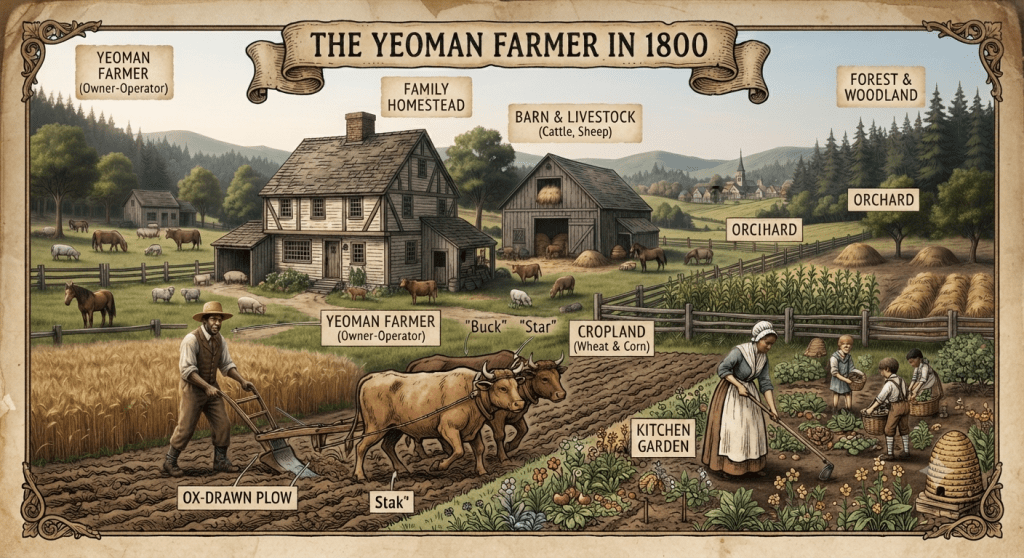
  • Yeoman Farming: Families like the Scotts, Puckrams, Chavises, and Basses owned independent homesteads ranging from small plots to sprawling multi-acre plantations. []
  • Cash Crops: They operated as self-sufficient agriculturalists, primarily cultivating tobacco, corn, and raising livestock like cattle and horses. [1, 2]
  • Material Wealth: Estate inventories from Granville County court files reveal that these households owned fine consumer goods, such as pewter plates, feather beds, and advanced agricultural equipment, reflecting a stable, working-to-middle-class lifestyle. [1]

2. Skilled Labor and Trades

While agriculture was the primary economic engine, many families specialized in highly skilled manual labor and artisan crafts, which made them economically indispensable to the regional economy. [1]

  • Artisans: Men worked as master blacksmiths, coopers (barrel makers), carpenters, stone masons, shoe makers, and saddle makers. [, 2]
  • Domestic Economies: Women managed complex home textile industries, generating income as highly sought-after spinners, weavers, and seamstresses. []
  • Inter-Class Commerce: They held a legal right to keep their own wages, enter into formal business contracts, and sue both white citizens and other free non-whites in court to collect unpaid debts. [1]

3. Tight-Knit Intermarriage (Endogamy)

To protect their autonomy, property, and tribal identities, families practiced a strict system of endogamy (marrying almost exclusively within their own community).

  • Kinship Hubs: Isolated settlements formed along county lines and waterways. Families deliberately intermarried across a small pool of allied surnames (e.g., Puckram, Scott, Hedgepeth, Chavis, Bass, Jeffries, and Pettiford). [1]
  • Preserving Identity: While outsiders viewed these settlements through a broad racial lens, local historians and community members recorded that they maintained a strong internal awareness of their Indigenous identity. Intermarriage ensured that family lands stayed within trusted tribal networks.[1, 2]

4. Nuanced Legal Rights and Civil Participation

In the early 1800s, Free People of Color possessed significant civil rights that would later be stripped away as the Civil War approached. [, 2]

  • Voting Rights: Until a restrictive state constitutional amendment revoked the right in 1835, free men of color who met property requirements legally voted in North Carolina elections.
  • Militia Service: Men were required to serve in local militias, standing side-by-side with white neighbors to defend the county.
  • Education and Religion: Some families could afford to send their children to local schools or hire private tutors. They built their own independent churches or worshipped in shared local congregations, often serving as ministers and spiritual leaders. [1, 2, 3, 4]

5. Growing Legal Restrictions and Hardships

Despite their economic successes, the lifestyle of Free People of Color was constantly threatened by systemic racism and changing state laws. [1, 2]

  • The Shadow of Slavery: They faced constant pressure to prove their free status. Traveling without official “free papers” carried the severe risk of being kidnapped or illegally sold into slavery.
  • The 1830s Shift: Following regional slave rebellions (such as Nat Turner’s rebellion in Virginia), North Carolina passed increasingly aggressive laws. Free People of Color were stripped of their right to vote, banned from carrying firearms without a court license, and barred from teaching literacy. [, 2, 3]

The Hidden History of the Yeoman Farmer

When we look back at the history of the pre-Civil War South, popular culture often shows us only two groups: wealthy plantation owners and enslaved laborers. But there was a massive, independent middle class that stood between them: the Yeoman Farmers.

For Free People of Color and families of Indigenous descent—such as the Saponi and Nanticoke lines in Granville County, North Carolina—yeoman farming wasn’t just a job. It was a vital shield for survival, autonomy, and independence.

What is a Yeoman Farmer?

A yeoman farmer was a self-sufficient, small-scale landowner. Unlike the elite planters who controlled thousands of acres, yeomen operated modest family farms.

They lived by a simple rule: work your own land, feed your own family, and protect your independence.

The Core Pillars of the Yeoman Lifestyle

  • True Land Ownership: Yeomen legally owned their deeds. Farms typically ranged from small homesteads to a few hundred acres.
  • Family-Powered Labor: The farm relied on the daily labor of the family. Spouses, children, and occasionally neighbors worked the fields together.
  • Diversified Crops: Instead of relying entirely on a single cash crop, they grew food for survival (corn, wheat, and vegetables) alongside small patches of market crops (tobacco or cotton) to pay taxes.
  • Total Self-Reliance: The primary goal was to secure food and shelter for the household. Anything left over was bartered locally for manufactured goods like iron tools or fine cloth.

Yeoman vs. Planter: What Was the Difference?

To understand how unique this lifestyle was, look at how it compared to the wealthy plantation class:

  • The Planters: Relied on mass enslaved labor, focused entirely on commercial profit, and formed a wealthy political aristocracy.
  • The Yeomen: Relied on immediate family labor, focused on household self-sufficiency, and formed a respected rural working class.

Why Yeoman Farming Mattered to Free People of Color

For our ancestors navigating a highly restrictive and changing legal landscape in the early 1800s, owning a yeoman farm changed everything:

  1. A Buffer from Outside Interference: Owning land created a private sanctuary. It allowed families to live, worship, and gather away from the strict surveillance of the planter elite.
  2. Economic Protection: Because they were self-employed, these families could not be financially manipulated, starved out, or controlled by hostile landlords or employers.
  3. Preserving Tribal Networks: Land ownership allowed families to practice endogamy (marrying within their own community). By passing land down strictly to other trusted, local ancestral lines, they ensured their wealth and Indigenous identity stayed protected across generations.

When you look at early census records and see our ancestors listed as independent farmers, you aren’t just looking at an occupation—you are looking at a legacy of deliberate survival, resilience, and hard-earned freedom

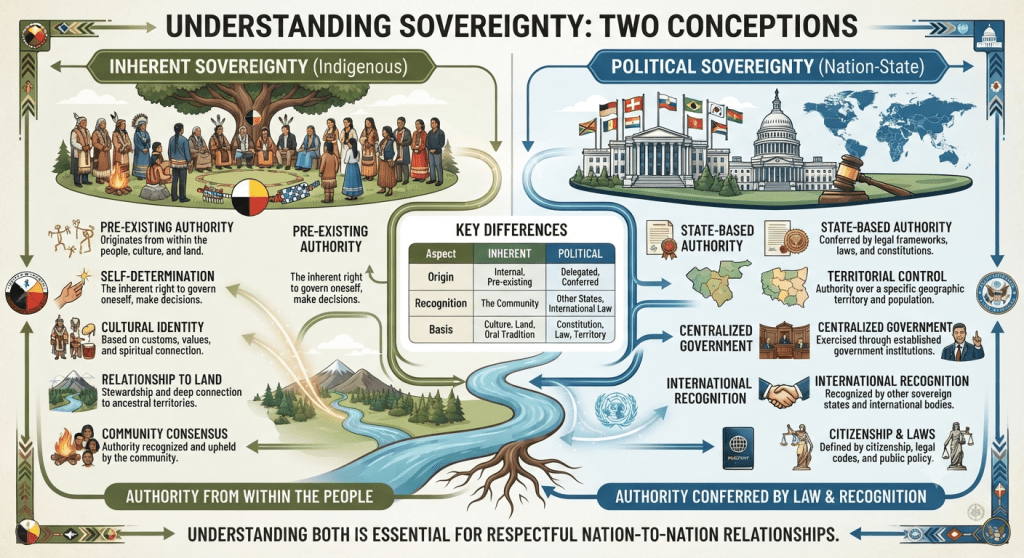
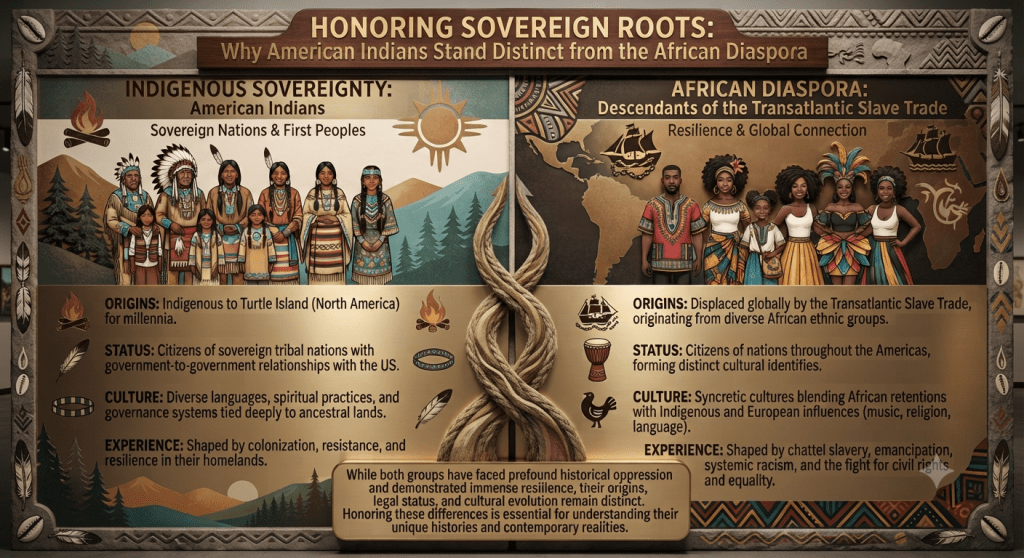
Honoring Sovereign Roots: Why American Indians Stand Distinct from the African Diaspora

In conversations surrounding ancestry, heritage, and global history, it is common to hear deep discussions about the African diaspora. This term beautifully describes the global dispersion of African peoples throughout history, primarily through the transatlantic slave trade, and the rich, resilient cultures they built worldwide.

However, a well-intentioned but misguided trend has emerged: attempting to fold American Indians—the Indigenous peoples of the Americas—into this global African diaspora narrative. While historical proximity, shared struggles against colonialism, and multi-ethnic intermarriages are real historical facts, American Indians possess a distinct, sovereign identity that stands completely independent of any global diaspora framework. Understanding and respecting this distinction is not just a matter of historical accuracy; it is an act of deep honor and respect for Indigenous sovereignty.

A Matter of Political Sovereignty, Not Just Race

The primary reason American Indians are not part of the African diaspora is rooted in the concept of inherent sovereignty. Diaspora frameworks are typically built around shared global racial categories, transnational migrations, and cultural dispersal.

In contrast, American Indian identity is fundamentally tied to political nationhood, specific geographic ancestral homelands, and continuous tribal governance. Indigenous peoples were self-governing nations with distinct languages, laws, and spiritual traditions thousands of years before European colonization or the forced migration of enslaved Africans. To categorize Native Americans as part of an external diaspora reduces sovereign nations to a generic racial category, effectively erasing their unique political status.

Unraveling the “Paper Erasure” of the Jim Crow South

Much of the confusion today stems from colonial and state bureaucratic records, particularly in the Southern and Mid-Atlantic states. Historically, non-reservation tribal communities—such as the Saponi of the North Carolina and Virginia Piedmont—faced a brutal system of legal and social white supremacy.

To strip Native Americans of their land and treaty rights, Southern states enforced a strict Black-white racial binary. Bureaucrats and census takers systematically refused to write “Indian” on official documents, choosing instead to forcefully label Indigenous individuals as “Mulatto,” “Free Person of Color,” or “Black.”

Today, looking back at those old records and confusing a forced colonial label with a people’s true identity does a grave disservice to history. It mistakes a weapon of bureaucratic erasure for historical truth.

Why Respecting This Boundary is Honorable

Respecting the distinct boundaries of American Indian identity is a profound act of historical and human respect.

  • It Protects Sovereign Rights: Recognizing Native Americans as distinct nations upholds their ongoing legal and political battle for self-determination and federal or state recognition.
  • It Rejects Colonial Erasure: Refusing to force external theoretical frameworks onto Indigenous people counteracts centuries of government attempts to absorb, dilute, and erase Native identity.
  • It Honors True Ancestry: True solidarity does not require merging distinct histories. We can honor the profound history of the African diaspora while simultaneously respecting that American Indians belong to the very soil beneath our feet.

Indigenous American ancestry is a sacred link to the past. Honoring American Indians as the distinct, sovereign peoples they have always been ensures that their unique voices, histories, and rights are preserved for the generations to come

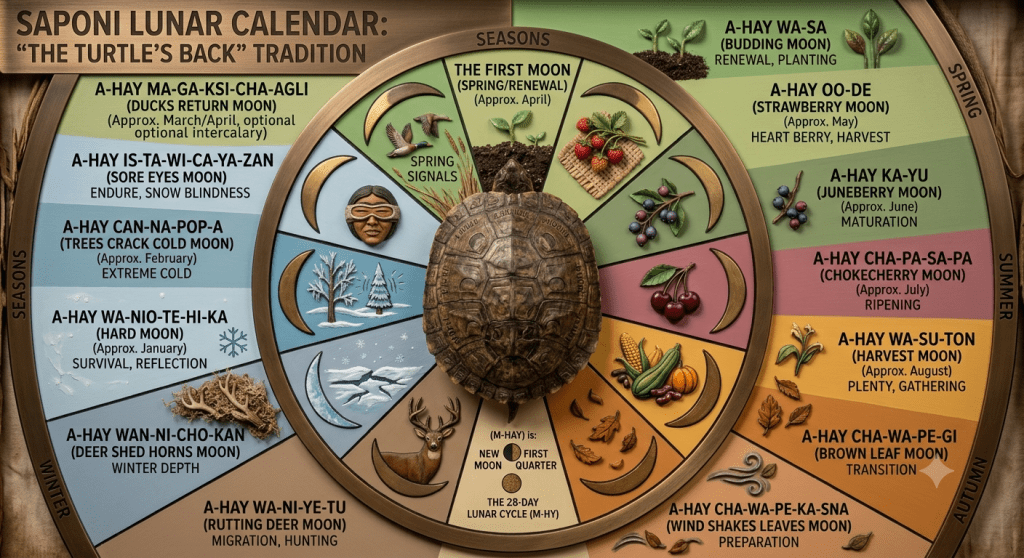
The Piedmont Moon: Lunar Cycles and Seasonal Tracking

To truly understand historical Saponi life, one must look beyond material culture and examine how they structured time itself. Unlike the fixed, 12-month Gregorian calendar used by European colonists, the Saponi and neighboring Eastern Woodlands peoples relied on a lunar calendar. Time was measured by 13 distinct moon cycles, with each new moon marking a shift in the ecological rhythms of the Virginia and North Carolina Piedmont.

Rather than a passive way to count days, tracking the moon was an active system for survival, agriculture, and spiritual alignment.

The New Moon: A Time for Inner Renewal

In Saponi tradition, the arrival of the new moon—the dark phase of the lunar cycle—shifts human focus inward. While full moons often host vibrant social gatherings, the new moon is a sacred period of quiet reflection and purification.

  • Quiet Healing: The darkness provides a spiritual reset. It is a time for introspection, prayer, and intentionally releasing negative emotions like anger or anxiety accumulated over the past month.
  • Purification and Smudging: To welcome the new cycle with a clean slate, families traditionally use sacred medicine plants like sage, cedar, or sweetgrass to smudge their homes and bodies, brushing away stagnant energy.
  • Setting Intentions: The new moon is viewed as the ideal time to “plant seeds,” both metaphorically for personal goals and literally for agriculture. As the moon begins to grow (wax), its rising energy is historically favored for planting crops that grow above the ground.

Reading the Piedmont Landscape

Because each new moon initiates a fresh ecological phase, the moons were named after the natural shifts occurring in the surrounding environment. Early colonial explorers in the Piedmont, such as John Lederer in 1670 and William Byrd II in the early 1700s, documented how tightly Native spiritual and daily life revolved around these natural signs.

Instead of January or February, the Saponi tracked time through shifting seasonal markers:

  • The Awakening Moons: Early spring moons signaled the flowing of plant sap, the return of migratory birds, and the arrival of the greening grass.
  • The Abundance Moons: Summer and autumn moons tracked agricultural milestones, such as the ripening of wild berries, the roasting ear phase of corn, and the falling of leaves.
  • The Survival Moons: Winter moons focused on the physical elements, often named for the deep snows, the cracking of frozen trees, or the hunting of specific game when food resources grew scarce.

By aligning their lives with the 13 moons, the Saponi maintained a profound harmony with the earth—a connection that influenced everything from the seasonal materials woven into their clothing to the spiritual intentions set during the quietest nights of the month

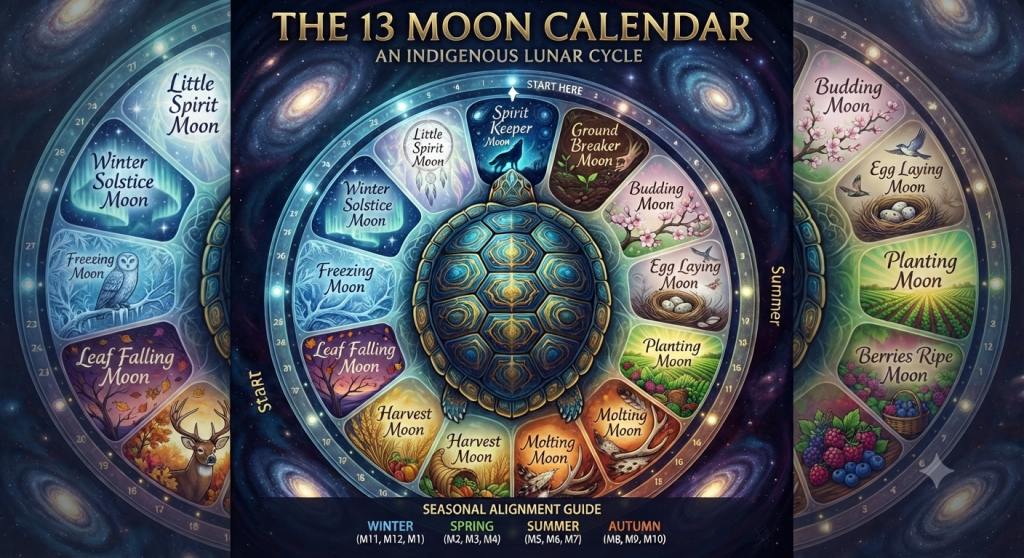
The 13-moon calendar, traditionally read on the 13 large scales (scutes) of a turtle’s back, serves as an ecological and spiritual guide. Each moon reflects the seasonal shifts of the land, weather, and wildlife, showing a deep connection to the flow of life in Eastern Woodlands and Piedmont cultures, including the Saponi people.

The meanings and importance of the 13 moons featured in the calendar image follow a cyclical pattern of awakening, growth, harvest, and rest:

1. Moon of Popping Trees (January)

  • Importance: This moon marks the heart of deep winter when extreme freezing causes the sap inside tree trunks to expand and pop audibly. It is a time for indoor storytelling, preservation of resources, and deep reflection during the coldest days.

2. Bear Moon (February)

  • Importance: Aligned with the time mother bears give birth to their cubs while still in hibernation. It teaches a lesson in quiet strength, internal vision, and relying on spiritual energy and stored resources to sustain life.

3. Maple Sugar Moon (March)

  • Importance: Signals the arrival of early spring when the sap begins to flow through the maple trees. This moon celebrates the “sweetness of life” and serves as a vital reminder to restore balance after a harsh winter.

4. Fishing Moon (April)

  • Importance: As the ice fully thaws on rivers and streams, fish (such as suckers) begin their annual spawning runs. Historically, this moon was crucial for survival, providing a fresh source of protein when winter food stores had run completely empty.

5. Flower Moon (May)

  • Importance: Celebrates the full awakening of the earth as wild plants and medicinal herbs bloom into life. It is an emotionally uplifting time to explore the spiritual healing powers of nature and the environment.

6. Strawberry Moon (June)

  • Importance: Named after the “heart berry,” the first fruit of the season to ripen. This moon represents community, sharing the first harvests, and practicing reconciliation—letting go of past judgments and interpersonal conflicts.

7. Sun Moon (July)

  • Importance: Represents the peak of summer and the longest days of sunlight. It is a time of intense growth, high energy, and gratitude for the sun’s power to mature the crops planted in the earth.

8. Green Corn Moon (August)

  • Importance: Honors the stage when corn kernels are plump, sweet, and ready for fresh eating, though not yet dry enough to store. It marks the transition into the harvest season, calling for community feasts and dances of thanks.

9. Harvest Moon (September)

  • Importance: The time of gathering the main crops—corn, beans, and squash—to prepare for the coming colder months. It emphasizes the cycle of life, hard work, and gathering the physical fruits of summer labor.

10. Hunting Moon (October)

  • Importance: As the leaves drop and game animals become more active, communities traditionally pivoted toward hunting and smoking meats. This moon is centered on gathering sustainable proteins for winter survival.

11. Freezing Moon (November)

  • Importance: Frost hardens the ground and ice begins to skin over the water. It serves as a stern reminder that nature is shutting down, urging families to complete their final winter preparations.

12. Little Spirit Moon (December)

  • Importance: This moon brings short days and long nights. It is a gentle spiritual period designated for healing, spreading positive energy to family, and focusing on mental and physical well-being through dark winter nights.

13. Big Spirit Moon (The “Blue Moon” or Cycle Closer)

  • Importance: Acting as a purification and grand finale to the cycle, this moon ties the year together. It represents the ultimate connection to the Creator, spiritual renewal, and a collective cleansing before the natural calendar resets back to the beginning.

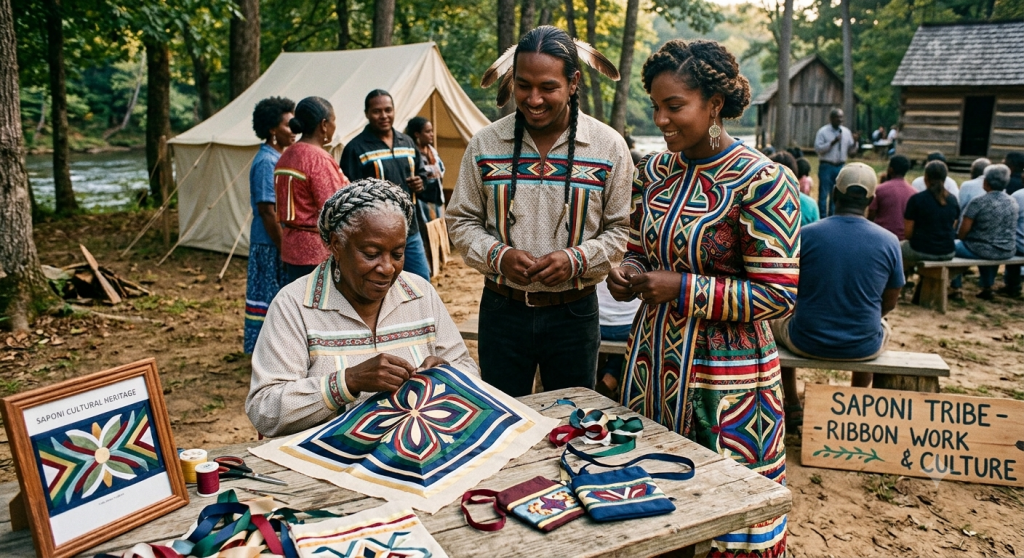
The Art of Ribbonwork: Where Fashion Met Culture Saponi Tribe

When European traders introduced silk and satin ribbons at colonial trading posts like Fort Christanna in the early 18th century, Saponi and regional Eastern Woodlands artists did not merely adopt European styles. Instead, they completely re-engineered this luxury textile through an Indigenous lens, creating an intricate artistic tradition known as ribbonwork appliqué.

Far from being a simple fashion trend, ribbonwork became a deeply meaningful method of cultural expression and storytelling.

A Evolution of Ancient Geometry

Before the arrival of trade goods, Eastern Woodlands tribes used painted mineral pigments, porcupine quills, and dyed moose hair to create border designs on buckskin clothing. Ribbons did not replace these ancestral designs—they translated them into a new medium.

  • Sacred Geometry: The diamond chains, fluid waves, triangles, and stepped patterns cut into ribbons represented cosmological concepts, tribal lineages, and the local Piedmont landscape.
  • Color Language: Colors carried profound spiritual meanings. Deep blues and blacks often represented the earth or underworld, while bright reds and whites symbolized life, vitality, or peace. The combination of colors allowed the wearer to silently communicate their status and identity.

The Ultimate Status Symbol

From a purely stylistic standpoint, ribbons were the high fashion of the 18th-century fur trade. Because silk had to be imported overseas, it was highly valuable.

  • Wealth and Prestige: Layering multiple rows of ribbons onto a breechcloth or the side flaps of leggings was a direct display of a family’s wealth, high social standing, and trading prowess.
  • Aesthetics of Movement: Silk ribbons added a dynamic, fluid element to clothing. During ceremonies or dances, the sheen of the fabric caught the light, and the long, trailing ends fluttered with the wind, creating a beautiful visual spectacle.

The Appliqué Technique

To create these garments, Indigenous women invented a highly complex positive-and-negative space layering technique:

  1. An artist would choose two or more ribbons of contrasting, vibrant colors (such as deep indigo and bright scarlet).
  2. She would cut precise slits, peaks, or geometric shapes into the top ribbon, then fold the raw edges under to create perfectly crisp lines.
  3. She would layer this cut ribbon over the solid base ribbon and attach it to a heavy wool fabric like Stroud cloth.
  4. Using tiny, nearly invisible hand stitches with fine silk thread, she secured the layers, resulting in a stunning, multi-layered mosaic pattern.

Through ribbonwork, the Saponi took the raw materials of global commerce and transformed them into an enduring symbol of Native artistry and survival.

The Evolution of Saponi Attire: Materials, Breechcloths, and Leggings

The traditional attire of the Saponi people—an Indigenous Siouan-speaking nation of the Virginia and North Carolina Piedmont—is a powerful testament to cultural continuity, utility, and adaptation. Long before European contact, Saponi clothing was deeply intertwined with the natural resources of the Eastern Woodlands. However, as the 17th and 18th centuries progressed, the introduction of colonial trade textiles sparked a fascinating evolution in fashion.

While the raw materials shifted from forest to trade post, the underlying structure, functionality, and cultural style of Saponi clothing remained distinctly Indigenous. Here is a look at how the Saponi adopted new materials like cotton, and a breakdown of their most foundational garments: the breechcloth and traditional leggings.


1. The Introduction of Cotton and Trade Textiles

For thousands of years, the traditional clothing of the Saponi was crafted from expertly tanned animal hides, rich furs, and woven plant fibers. While indigenous cotton varieties were cultivated and woven by Southwestern tribes for millennia, it was not an accessible textile in the pre-contact Eastern Woodlands.

The textile landscape changed rapidly through the following historical phases:

  • Colonial Agricultural Shifts: In 1607, British colonists introduced domesticated Old World cotton varieties to Virginia as a cash crop.
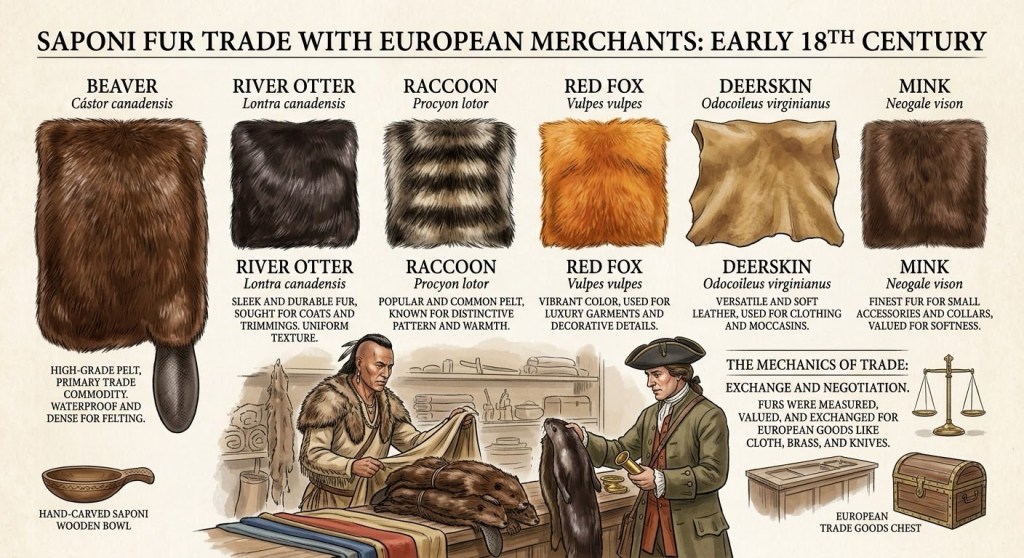
  • The Rise of the Fur Trade: By the late 17th and early 18th centuries, the Saponi engaged in a thriving trade network with English colonists, exchanging valuable furs and deerskins for European manufacturing goods.
  • The Fabric Transition: Alongside glass beads and iron tools, the Saponi enthusiastically adopted lightweight woven cotton, fine linen, and heavy wool (known as broadcloth or Stroud cloth).
  • The Rationale: Cotton and wool were lighter than heavy leather, dried much faster when wet, and accepted vibrant, deep dyes like indigo and vermilion far better than animal skins.

By the time the Saponi entered into colonial treaties and established communities near Fort Christanna, Virginia in 1714, imported cotton shirts and wool skirts were seamlessly integrated into daily life.


2. Anatomy of the Breechcloth

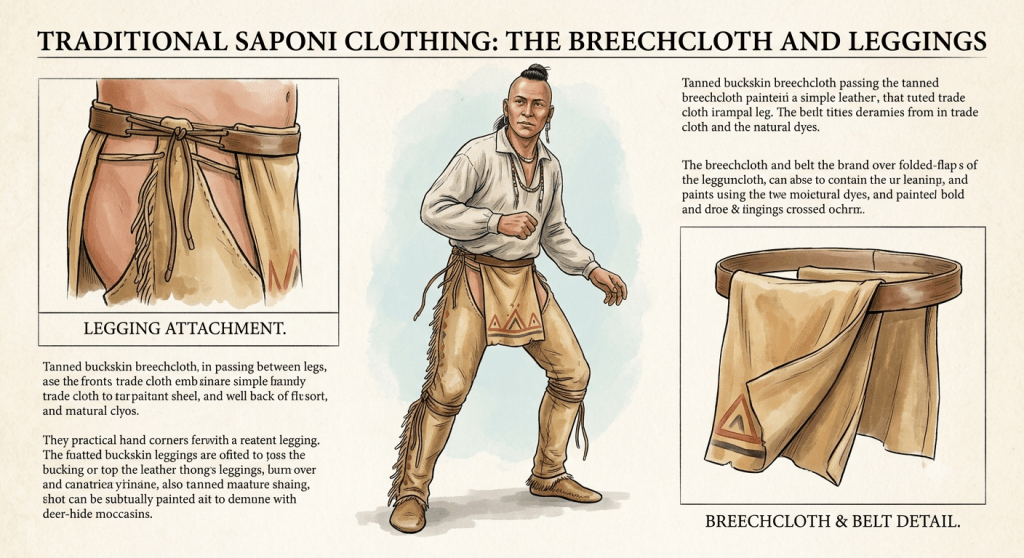
The most fundamental garment for men across the Eastern Woodlands was the breechcloth (historically written as breechclout or loincloth). This elegant, minimalist garment was engineered for high mobility in dense forest environments.

Structure and Dimensions

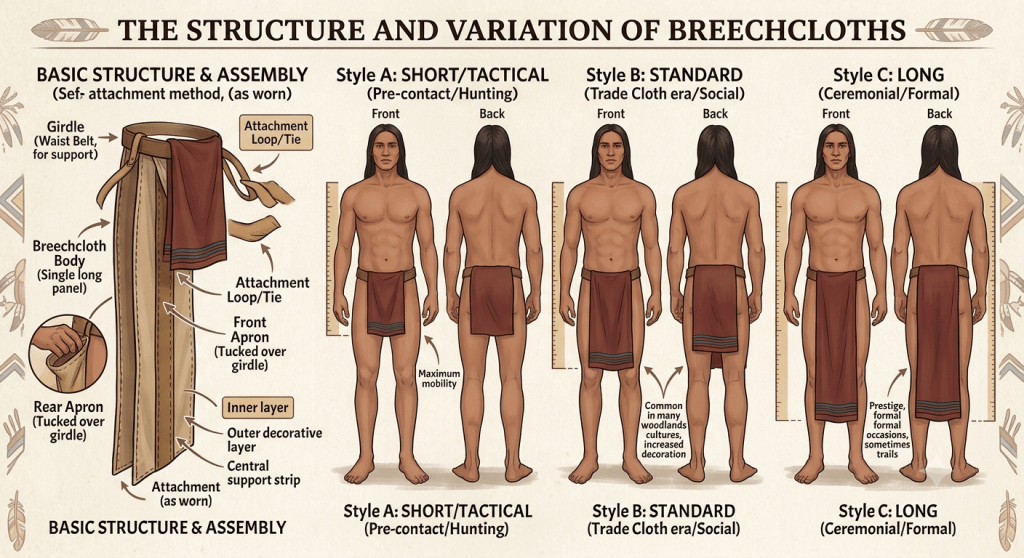
  • The Cut: A breechcloth consists of a single, long rectangular strip of material, usually measuring about 10 to 12 inches wide and between 3 to 6 feet long.
  • How It Is Worn: The wearer wraps a snug leather cord or belt around their waist. The long strip of fabric is passed between the legs, tucked under the belt at the waist, and looped over the top.
  • The Aprons: The excess fabric falls over the front and back of the belt, creating two hanging panels or “aprons” that cover the groin and buttocks.
  • Freedom of Movement: Crucially, the breechcloth does not wrap around the hips. The sides of the thighs remain entirely exposed. This bare-sided design eliminated chafing and allowed warriors, hunters, and farmers to run, climb, and bend without restriction.

Aesthetic Variations

For daily work, breechcloths were made of plain, durable deerskin or utilitarian trade cloth. For formal gatherings and ceremonial regalia, the front and back aprons became canvas spaces for artistic expression, featuring contrasting ribbon work borders, porcupine quillwork, and complex glass seed bead patterns along the bottom edges.


3. Traditional Eastern Woodlands Leggings

Because a breechcloth leaves the hips and legs exposed, it was paired with separate, independent leg coverings known simply as leggings. These were vital for protecting the skin from briars, ticks, brush, and frost.

Engineering Leggings

Unlike modern pants, traditional leggings are not connected at the waist or seat.

  • Two Separate Sleeves: Leggings are two completely independent fabric or leather tubes pulled up over each leg, reaching from the ankle all the way to the upper thigh.
  • The Hip Attachment: To keep them upright, a sturdy leather thong or strap on the top-outer edge of each legging extends up to the hip, where it ties directly onto the wearer’s main waist belt.
  • The Outer Seams: Leggings were formed by wrapping a single piece of material around the leg and sewing a vertical seam down the outside.
    • Skin Leggings: Tanned buckskin leggings featured a wide, left-over margin at the seam cut into fine fringes, which served the practical purpose of helping rainwater drip off the garment quickly.
    • Cloth Leggings: When made from traded wool or cotton, the seam was sewn closer to the skin, leaving a wide, flat fabric flap (often called a “wing”) running down the outer leg.

Garters and Embellishments

To prevent the heavy material from sagging or bunching at the knees during long treks, the Saponi wore garters—tightly tied bands made of finger-woven yarn or beaded leather—just below the knee. On formal broadcloth leggings, the wide outer wings and bottom hems were heavily adorned with contrasting silk ribbons and intricate geometric or floral beadwork unique to the Southeastern and Piedmont cultural regions.


Conclusion

The evolution of Saponi clothing demonstrates that adaptation is not a loss of culture, but a survival strategy. By taking European trade textiles like cotton and wool and tailoring them into traditional breechcloths and leggings, the Saponi preserved their functional style, comfort, and identity while embracing the changing world around them.