Reclaiming the Sacred Landscape: How America’s Oldest Mounds Disrupt Colonial History

For centuries, standard history textbooks taught a narrow, linear narrative of human civilization. We were told that complex society, advanced engineering, and deep spiritual law began exclusively in the Middle East and Western Europe. Indigenous Americans were frequently pushed to the margins—depicted as people without history, without permanence, and without a structured relationship to the Creator until European ships arrived on their shores.

Modern archaeology, linguistics, and Indigenous scholarship are completely upending that Eurocentric worldview.

By looking closely at the breathtaking timelines of North America’s ancient earthworks, we can dismantle colonial myths, understand the profound weight of what was stolen, and see how modern Indigenous communities are reclaiming their spiritual and historical narratives.


The Silent Witnesses: Earthen Engineering That Predates the Bible

To understand the depth of Indigenous history, we must look at the dirt beneath our feet. For generations, the monumental stone pyramids of Egypt stood as the universal benchmark for ancient human engineering. Yet, hidden in plain sight across the American continent are earthen structures that make the pyramids look young.

The LSU Campus Mounds in Baton Rouge, Louisiana, are officially recognized as the oldest surviving human-made structures on Earth. Comprehensive geological testing and radiocarbon dating confirm that construction on these mounds began approximately 11,300 years ago [lsu.edu]. GLOBAL HISTORICAL TIMELINE │ ├─ c. 9300 BCE: LSU Campus Mounds Construction Begins (America) │ ├─ c. 3500 BCE: Watson Brake Multi-Mound Complex Completed (America) │ ├─ c. 2670 BCE: Step Pyramid of Djoser Built (Egypt) │ ├─ c. 1200 BCE: Earliest Texts of the Hebrew Bible Written (Middle East) │ ├─ c. 1000 BCE: Olmec Civilization Builds La Venta Pyramid (Mesoamerica) │

To put this immense timeline into perspective:

  • The American Mounds (c. 9300 BCE): Were built at the end of the last Ice Age, around the same era as Göbekli Tepe in Turkey.
  • The Great Pyramid of Giza (c. 2560 BCE): Was built roughly 6,700 years after the LSU mounds.
  • The Holy Bible (c. 1200 BCE): Scribes began writing the earliest texts of the Hebrew Bible nearly 8,000 years after Indigenous Americans began engineering their sacred landscapes.

These mounds were not random piles of debris. They were masterworks of soil mechanics. Indigenous engineers meticulously layered different clays and organic soils to prevent erosion, creating structures that have survived millennia of intense Mississippi Valley floods. Furthermore, these sites were giant, living calendars—precisely aligned with solar solstices, lunar cycles, and constellations to bring cosmic law down to earth.


The Double Dispossession: The Theft of Land and Religion

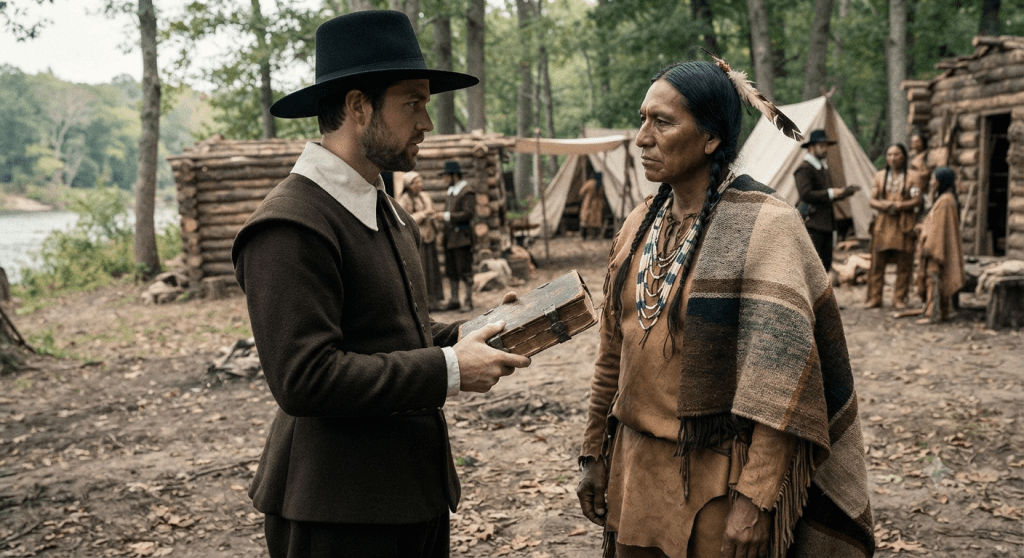
When European colonizers arrived in the 15th through 18th centuries, they encountered advanced, deeply spiritual societies like the Saponi of the Virginia-Carolina Piedmont. In 1728, a Saponi guide named Ned Bearskin shared the “Three Great Articles of Natural Religion” with colonial surveyors, outlining a sophisticated moral code rooted in a Supreme Creator (Monack), a clear distinction between good and bad deeds (such as condemning domestic abuse and dishonesty), and a system of afterlife justice.

Because traditional Indigenous law viewed the land as a sentient relative to be protected—rather than a piece of property to be bought, sold, and fenced—colonizers weaponized Western theology to steal it.

Through the Doctrine of Discovery, European powers declared that any land inhabited by non-Christians was legally “empty” (terra nullius). To take the land, they had to systematically erase the religion. This double dispossession was carried out with brutal efficiency:

  1. Physical Displacement: Forcing tribes off their ancestral territories legally severed them from the sacred mountains, rivers, and mounds required to perform their ceremonies.
  2. The Criminalization of Faith: In 1883, the U.S. government enacted the Code of Indian Offenses, making traditional feasts, dances, and medicine practices criminal acts punishable by imprisonment or the withholding of food rations.
  3. The Boarding School System: Generations of Native children were forcibly removed from their families and placed in institutional boarding schools. Under the administrative philosophy “Kill the Indian, Save the Man,” children were physically punished for speaking their languages or practicing their traditional faith, replaced by mandatory Western Christian instruction.

Reclaiming the Narrative: Indigenous Biblical Hermeneutics

Despite centuries of systematic land theft and religious erasure, Indigenous identity was never destroyed. Today, many Native descendants practice mainstream Christian faiths (such as the modern Saponi communities in the Baptist and Methodist traditions), but they are doing so on their own terms.

During the Self-Determination and Red Power Eras of the 1970s and 1980s, a powerful intellectual movement emerged: Indigenous Biblical Hermeneutics[library.law.howard.edu, en.wikipedia.org].

This was not done to appease European colonists or modern Western churches. It was developed as an act of theological sovereignty to challenge colonial narratives. Indigenous Christian scholars separate the spiritual teachings of Jesus—a brown-skinned, tribal Middle Eastern man living under the brutal military occupation of the Roman Empire—from the white, imperialist systems that used his name to justify colonization.

These scholars argue that the Creator was actively walking with Indigenous Americans for tens of thousands of years before European contact. They view their deep history, their ancient moral laws, and their monumental earthworks as proof of a “First Revelation”—a sacred covenant between their ancestors and the earth that predates the written pages of the Bible itself.


History Cannot Be Erased

When we look at the oldest mounds in America, we are looking at monuments of endurance. They stand as physical proof that Indigenous history is deeper, older, and far more sophisticated than colonial narratives ever dared to admit.

By recognizing that America holds the oldest mounds on earth, we do not just correct a line in an archaeology textbook; we honor the ancient, unbroken stewardship of the first people of this continent, whose laws, morality, and connection to the cosmos remain written permanently into the soil.
The Modern Frontier: How Immigration Narratives and Systemic Structures Accelerate the Erasure of Indigenous Homelands

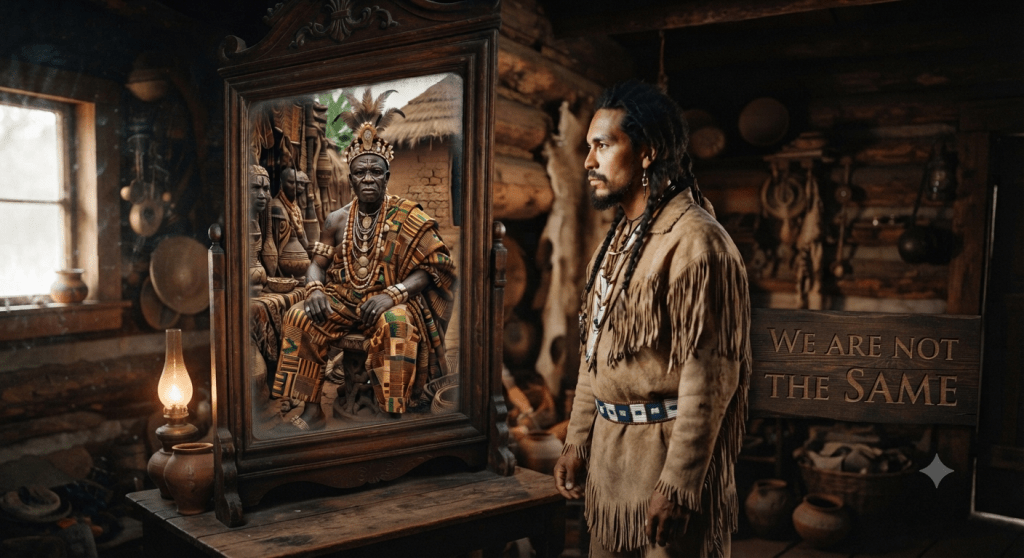
We Are Not The Same

The ongoing national debate surrounding mass immigration is almost exclusively framed through a modern political lens: a head-on collision between the federal rule of law, national sovereignty, and global humanitarian crises. Yet, beneath the noise of mainstream media, a quieter and far more devastating crisis is unfolding. For the original, sovereign nations of this continent—particularly East Coast and historically marginalized tribes who have navigated centuries of displacement without a federal reservation land base—modern immigration patterns and the policies managing them have effectively become a new system of cultural and structural erasure.

To truly understand how this contemporary demographic shift impacts the rightful stewards of the land, we must peel back the layers of systemic overreach, ecological strain, and the painful mischaracterization of Indigenous identity by incoming populations.


1. The Erasure of Inherent Sovereignty and Original Boundaries

The most fundamental disrespect embedded in the modern immigration system is the complete omission of tribal nations from the conversation.

  • The Invisible Border: Mainstream political battles focus entirely on the legalities of the U.S. federal government versus state jurisdictions. By treating the land as an open real estate market or a political blank slate, both the government and incoming populations operate under the myth of “empty land.”
  • Overwriting the Covenant: For many Indigenous communities, their traditional region is not just a geographic space; it is a landscape bound by a multi-generational spiritual covenant of care and reciprocity. When mass immigration is facilitated without consulting tribal leadership, it effectively treats ancestral homelands as a political playground, entirely erasing original Indigenous boundaries and treaty rights.

2. The Strain on Localized Resources and Cultural Spaces

Because many state-recognized and non-federally acknowledged tribes frequently operate without federal subsidies or protected reservation lands, managing community stability alongside rapid regional population growth presents immediate, tangible challenges.

  • Competition for Local Infrastructure: Localized tribes often rely heavily on regional infrastructure, tribal fees, and limited state grants to fund community healthcare, elder care, and youth cultural programs. Rapid demographic influxes strain rural public schools and county services, diluting the localized support networks that tribal families rely on.
  • The Destruction of Traditional Foraging Grounds: Increased population growth directly drives urban sprawl, commercial zoning, and housing developments. As a result, the private or undeveloped forests where tribal members traditionally gathered medicinal plants, clay, or wood are progressively cleared, physically fracturing the close-knit, rural spaces where cultural practices were historically preserved.

3. The Weaponization of the Black-White Binary and Identity Misclassification

Perhaps the most painful and personal form of disrespect experienced by East Coast and southeastern Native peoples today is the direct invalidation of their identity by outsiders who view the American landscape through a rigid, foreign racial binary.

  • The Legacy of Paper Genocide: For generations, eastern tribes fought against “paper genocide”—the deliberate, legal erasing of Native identities from historical records by colonial and Jim Crow-era registrars who used arbitrary racial reclassifications to label Indigenous people as exclusively “Black,” “Colored,” or “White” in order to seize their land and dissolve their legal status.
  • The Ignorance of Newcomers: When modern immigrants arrive without understanding this complex historical trauma, they frequently view the American landscape strictly through a binary lens. To be told by a newcomer that you “do not belong here” or to have your heritage reclassified as entirely foreign—knowing your ancestors’ roots are buried deep in this soil for thousands of years—is a profound violation of inherent sovereignty. It treats the original stewards of the house as if they are visitors.

4. The True Root: Systems, Not Individuals

While the friction between incoming populations and Indigenous descendants is real, it is critical to recognize that individual migrants are not the architects of this erasure. Rather, they are operating within a rigid, colonial infrastructure designed by the state to overwrite original sovereign identities.

  • The Failure of Recognition Frameworks: The federal government’s two-tiered system prioritizes certain tribes while leaving historic nations to spend decades fighting bureaucratic battles for official recognition. Without a federally protected land base, tribes remain legally vulnerable to local zoning laws and corporate development.
  • The Property Commodity System: Western property law treats the earth as a commodity to be split, paved, and sold for maximum profit. This system does not recognize a spiritual alliance with nature. When population growth occurs, the real estate system automatically responds with suburban development and deforestation, legalizing the destruction of the natural world and stripping original stewards of the clean resources required to maintain their traditional way of life.

Conclusion: Reclaiming the Narrative

The intersection of mass immigration and Indigenous erasure is a complex, multi-layered crisis. It forces a head-on collision between definitions of legal order, human survival, and historical justice. For original peoples, the fight is not merely about a border; it is a vital defense of their ancestors’ refusal to be erased by the state or misclassified by the public. True respect for the land cannot exist without recognizing the unbroken lineage of the people who have guarded its spirit since time immemorial

The Saponi Clan Reference Guide: Kinship, Customary Law, and Family Protection

This guide serves as a digital reference of our traditional family protocols, matrilineal governance, and the customary laws that protect the peace and integrity of the Saponi household.

1. Core Structure: Matrilineal Governance

  • Lineage and Identity: Clan identity, names, and tribal belonging pass strictly through the mother’s line.
  • The Household Domain: Longhouses and family dwellings belong to the women of the clan; a husband resides in his wife’s family domain as a guest.
  • Children’s Standing: Children belong entirely to the mother’s clan, ensuring their protection, inheritance, and identity remain intact regardless of marital changes.

2. Roles within the Clan Leadership

  • The Matriarchs (Elders): The senior women of the clan hold final authority over household operations, marriage approval, and internal resource management.
  • The Maternal Uncle: The mother’s brother serves as the primary male authority figure, protector, and disciplinarian for his sister’s children.
  • Cousin Kinship: First cousins through the maternal line (parallel cousins) are viewed legally and socially as brothers and sisters, strengthening the core family unit.

3. Protocol for Marital Conflict with a Foreigner

When an outsider or foreigner marries into the clan and causes persistent disruption, disrespect, or abuse, the family activates the following traditional protocols:

Step 1: Elder Evaluation

  • Review: The family matriarchs and elders meet privately to assess the outsider’s behavior against community standards of respect and balance.
  • Mediation: If appropriate, initial boundaries are communicated clearly to the outsider, detailing the required behavioral corrections.

Step 2: Maternal Uncle Intervention

  • Confrontation: If the problematic behavior or abuse continues, the maternal uncle steps in directly as the defender of the household.
  • Expulsion: Utilizing his traditional authority, the maternal uncle can permanently eject the problematic foreign spouse from the clan’s home and property.

Step 4: Social Shunning and Isolation

  • Severing Ties: If the outsider refuses to respect the expulsion, the clan and the broader community enforce strict social shunning.
  • Total Invisibility: Community members completely withdraw communication, trading, and social recognition from the individual.
  • Space Protection: The outsider is strictly barred from entering tribal grounds, ceremonies, and private family gatherings.

4. Preservation of Peace

In Saponi governance, the harmony and spiritual safety of the matrilineal collective always supersede an individual marriage. If a marriage brings chaos instead of balance, the clan moves decisively to restore peace, protect the children, and secure the household boundaries.